The Ultimate Guide to Kuala Lumpur: Restaurants, Top Sights, Travel Tips & Transportation
This ultimate guide to Kuala Lumpur, features local restaurants, must see sights, practical travel tips, and easy transportation options. From vibrant street food to iconic landmarks, plan your perfect trip with insider advice.
TRAVEL BLOGMALAYSIASOUTHEAST ASIA
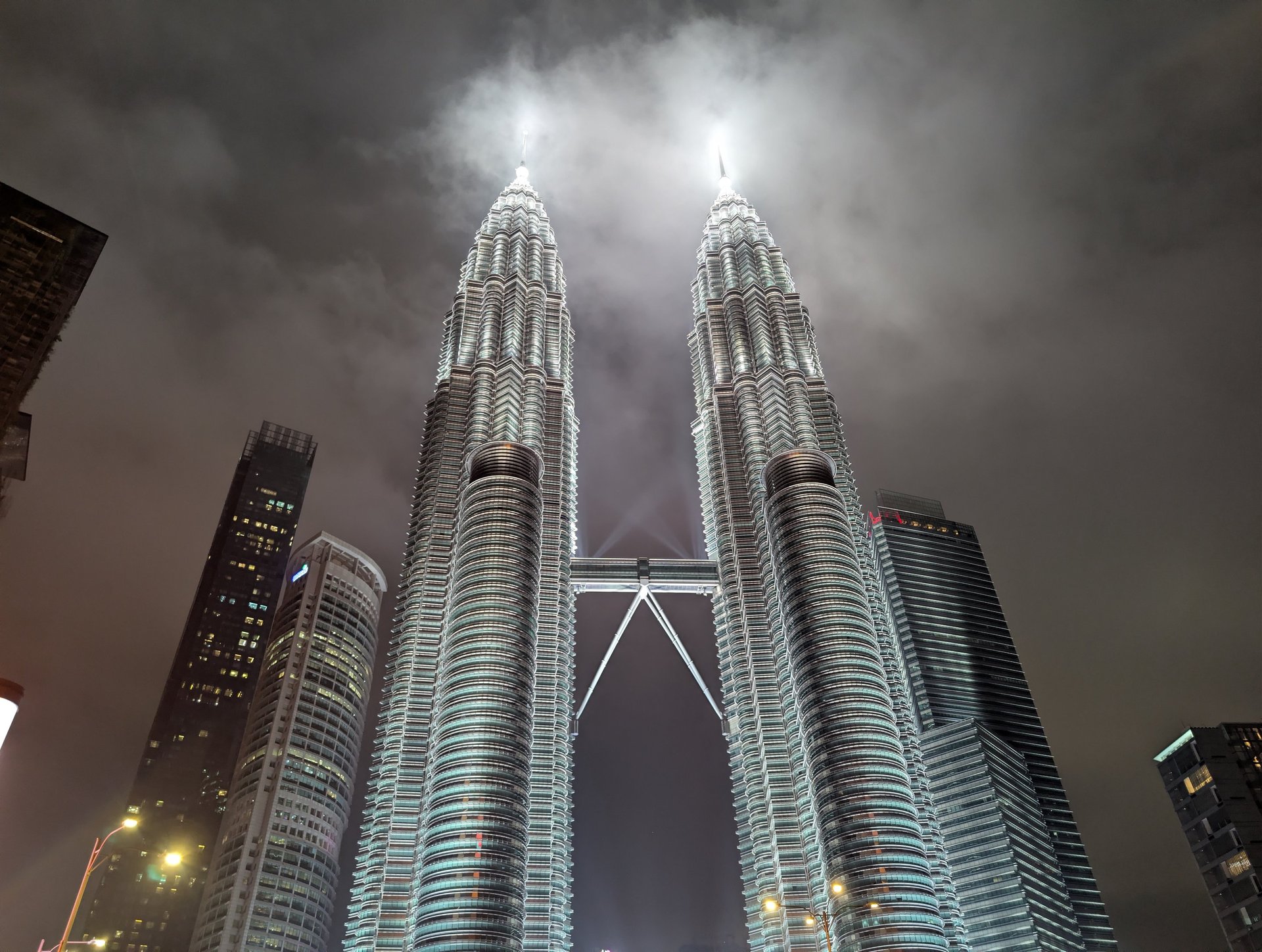
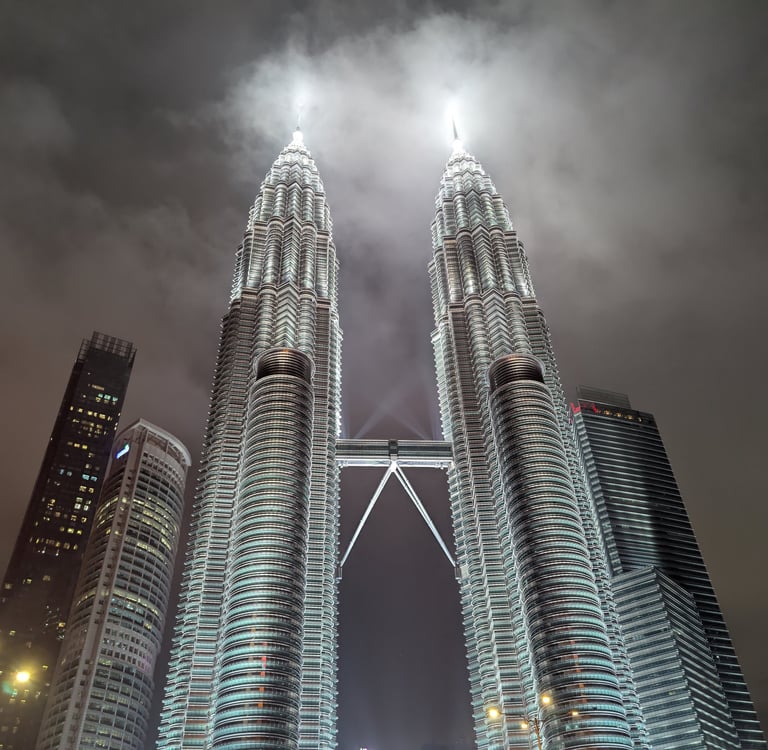
What makes Kuala Lumpur unforgettable isn’t just the skyline; it’s the people and the food. KL is where Malay, Chinese, and Indian cultures blend seamlessly, not in separate corners, but side by side on the same street, sometimes even at the same table. Walk through the city and you’ll hear different languages in a single block, Malay, Cantonese, Tamil, English, all woven into daily life. Mosques, temples, and churches stand within minutes of each other. Festivals overlap. Traditions coexist. And nowhere is that harmony more obvious than in the food.
Why Kualua Lumpur Deserves a Spot on Your Travel List
This post contains affiliate links. If you make a purchase through them, we may earn a small commission at no extra cost to you. These help cover the costs associated with operating this website. Thanks! Learn more here.
Best Local Resturants in Kuala Lumpur
The food in Malaysia is some of my favorite in the world. What I love the most is how every meal felt like a crossroads of cultures. Malay, Chinese and Indian overlapping and blending perfectly, creating something familiar, yet all its own.
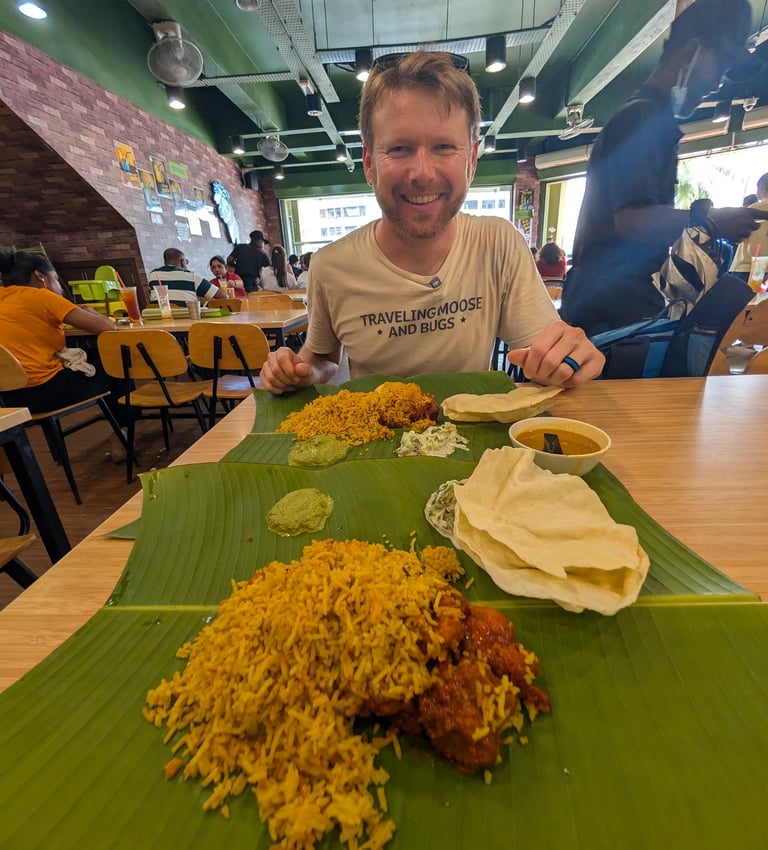
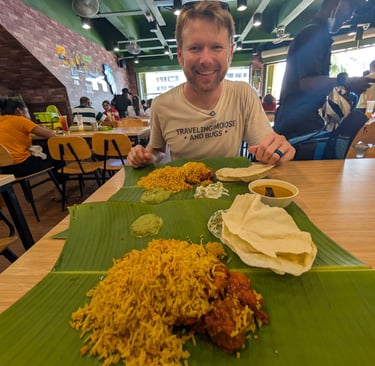
Oh Yeah Banana Leaf Batu Caves: Don and I both had the chicken biryani that is steamed in bamboo and served on a leaf. The food was so flavorful, and the service was amazing. The meat portion was huge, and the chutney was unlimited. The chicken was just a little spicy, but not overwhelming. They give you forks and spoons, but using them is optional, so we did as the locals do and ate with our hands. There are a few locations around, so if you are near one, I definitely recommend going in for this iconic dish. The total was 44.20RM ($10.98 USD).
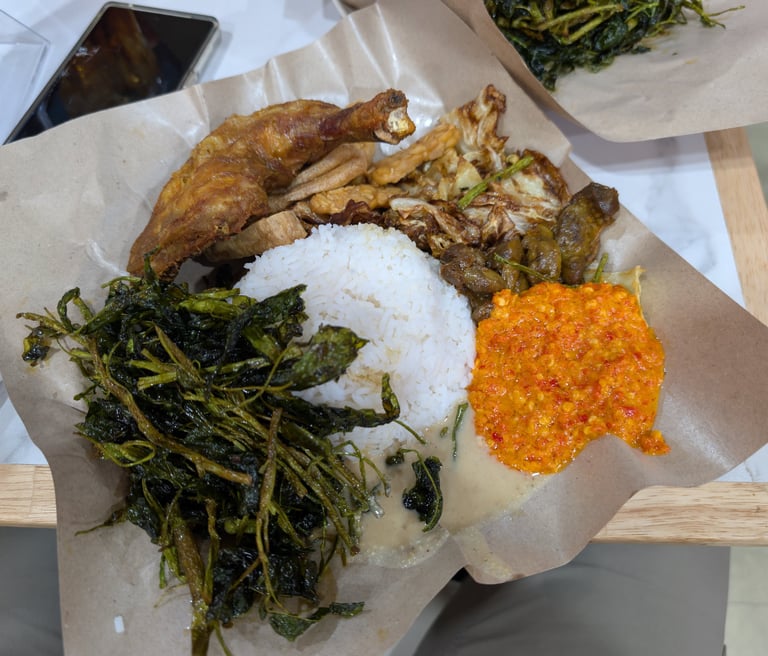
Ayam Gepuk Macet: Delicious fried Indonesian comfort food. This was our first meal out and our first meal eaten with our hands. There is a sink in the back to wash your hands before and after eating. I enjoyed eating with my hands; it made it more personal and felt more natural. I had the smallest combo, and Don had the largest, plus we added a side of spinach, which I didn't realize was flash-fried and a little oily in opinion. It was good, but I probably wouldn't have gotten it if I knew. Both combos come with fried chicken, rice, vegetables, a spicy chili sambal, and a creamy, rich cashew sambal. For those who don't know sambal, its an essential condiment in Malaysian and Indonesian cuisine made from fresh ground chilis, shrimp paste, garlic, lime and sometimes nuts or dried fish. Don's plate also had more fried spinach, tofu, and organ meat. This was a very rich and heavy meal and not one I could have all the time. It was 38.50 RM ($9.48 USD).
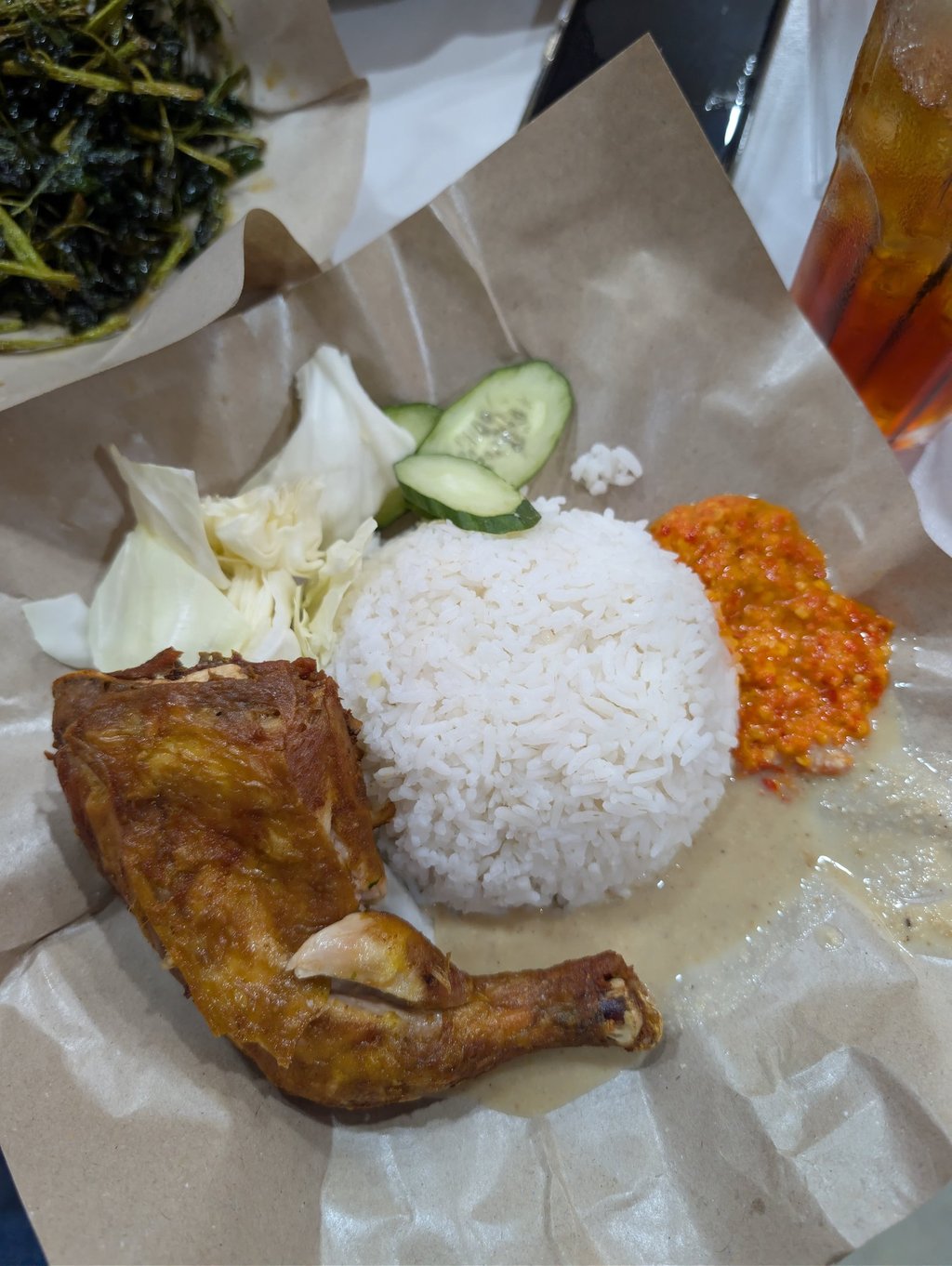
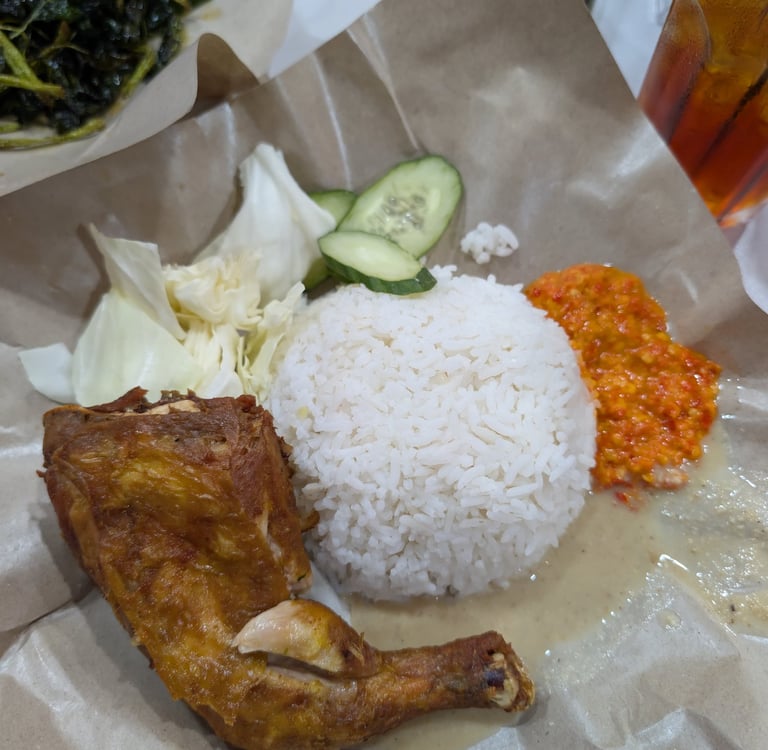
Ayam Gepuk Set A
Ayam Gepuk Set D
Tao Xiang Bah Kut Teh Fish Head Noodles: This restaurant is known for its delicious fish head soup. We got the fish head soup for two, a side of sauteed greens, and two herbal teas. The place was packed with locals, and the portions were huge. The soup was made with a fried freshwater fish that had a bit of a muddy taste, but not too overwhelming. The soup was also loaded with tofu skin and rice noodles in a rich, white fish broth. Total 40RM ($9.72 USD).
Ras Balouch Restaurant: A delicious Pakistani restaurant outside of the tourist district. I'm not really sure how the pricing works for this restaurant. At first we thought it was a buffet, but now I think it's by the plate and depends on what you get. There is a menu with prices, but I think that's different from the "hot bar" where we got our food. We each got one plate with different rice dishes, some meat, and vegetables. I'm not sure what the name of anything we got was, but it was all delicious. There were many different choices of meats and curries, as well as plenty of vegetarian options. The place started to get very busy with locals as we were eating, but I think we were the only tourists. We also each had a milk ice tea and the bill came to a very fair 33 RM ($8.15 USD). The "hot bar" didn't seem to be temperature-controlled but there was a microwave to reheat your dishes but we didn't use it.
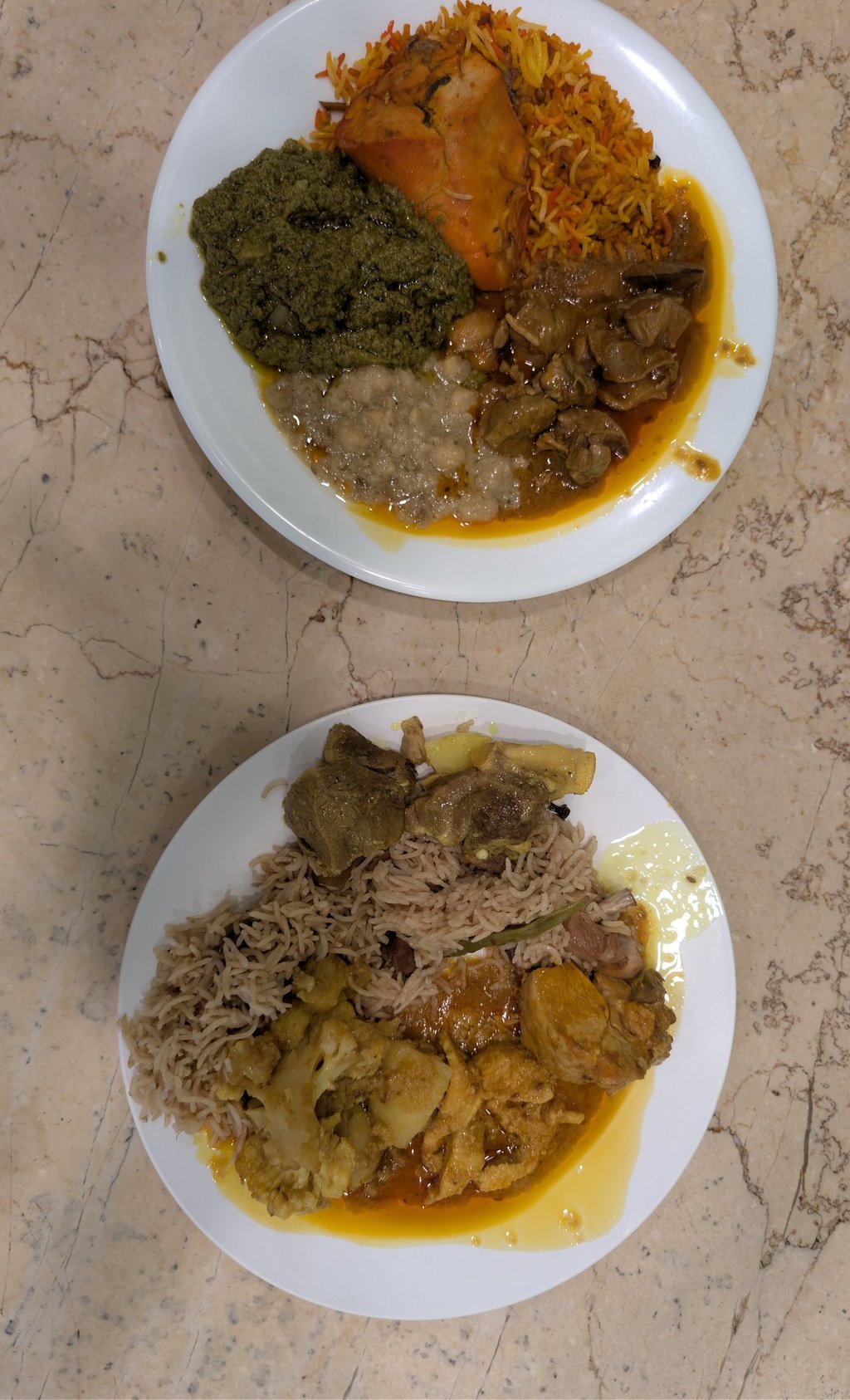
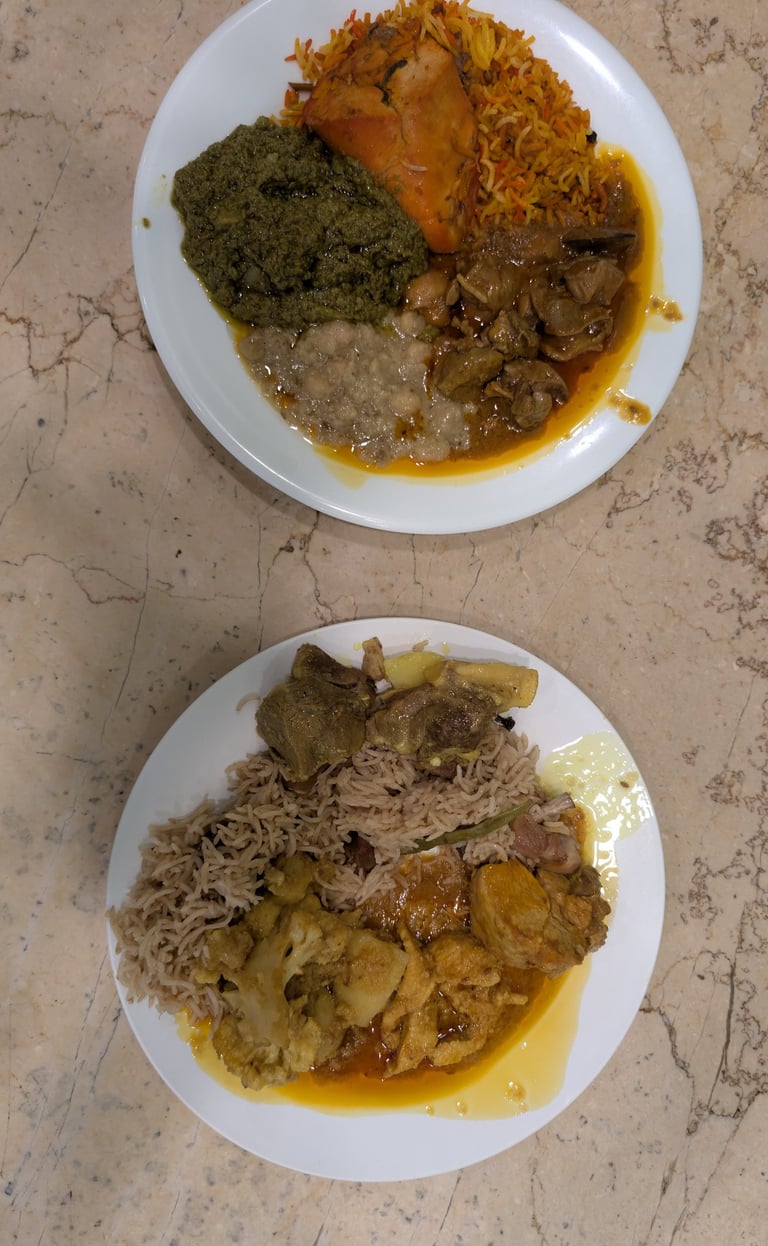
Our #1 recommendation for travelers new to Malaysia (especially Americans)
Budaya Restaurant: This is a great spot to dive into Malay food in a comfortable and familiar sit-down environment. Budaya is a charming and well decorated restaurant with a menu featuring many classic Malaysian dishes, carefully prepared to order as opposed to the many buffet style places we often eat at. (We're aware non-temperature controlled outdoor jungle buffets may not be appropriate for all travelers.) We each ordered our own bowl of steamed rice and spilt an order of chicken masak lemak chili api, which is a turmeric coconut curry. We also shared an iced lemon tea. The food was delicious, the service was great, and they have something for everyone, even forks and spoons. The price is 58RM ($14.33 USD).
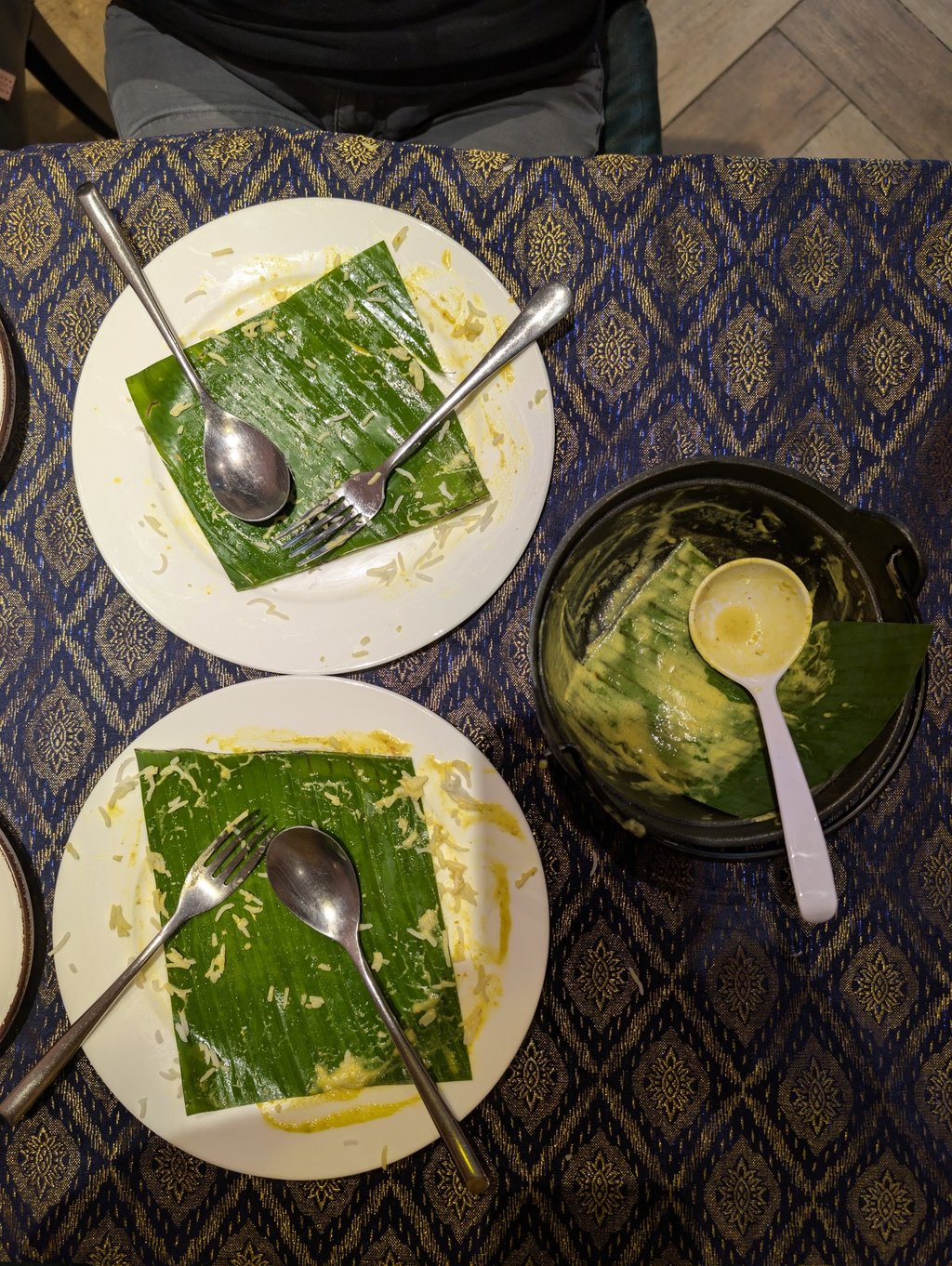
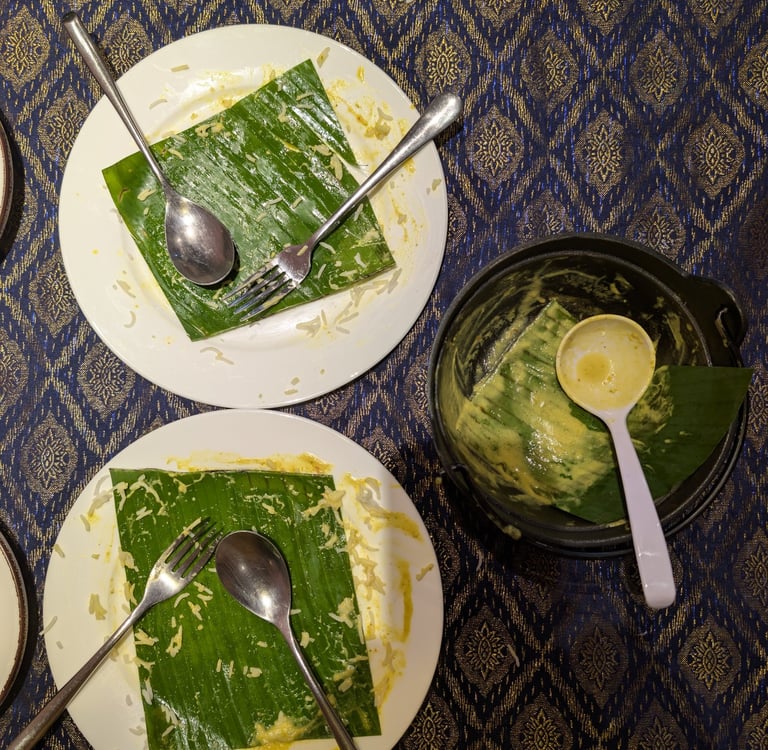
So Delicious I Forgot to Take a Picture!
Pop: This was in the Sunway Putra Mall food court near our apartment. Its a local Malaysian fast food chain serving there spin on traditional dishes. Don had ayam gepuk (fried chicken) with extra chicken, and I had salted egg buttermilk milk chicken. It was delicious, fresh, fast food for a great price. The total was 28.88 RM, 7.08 USD.
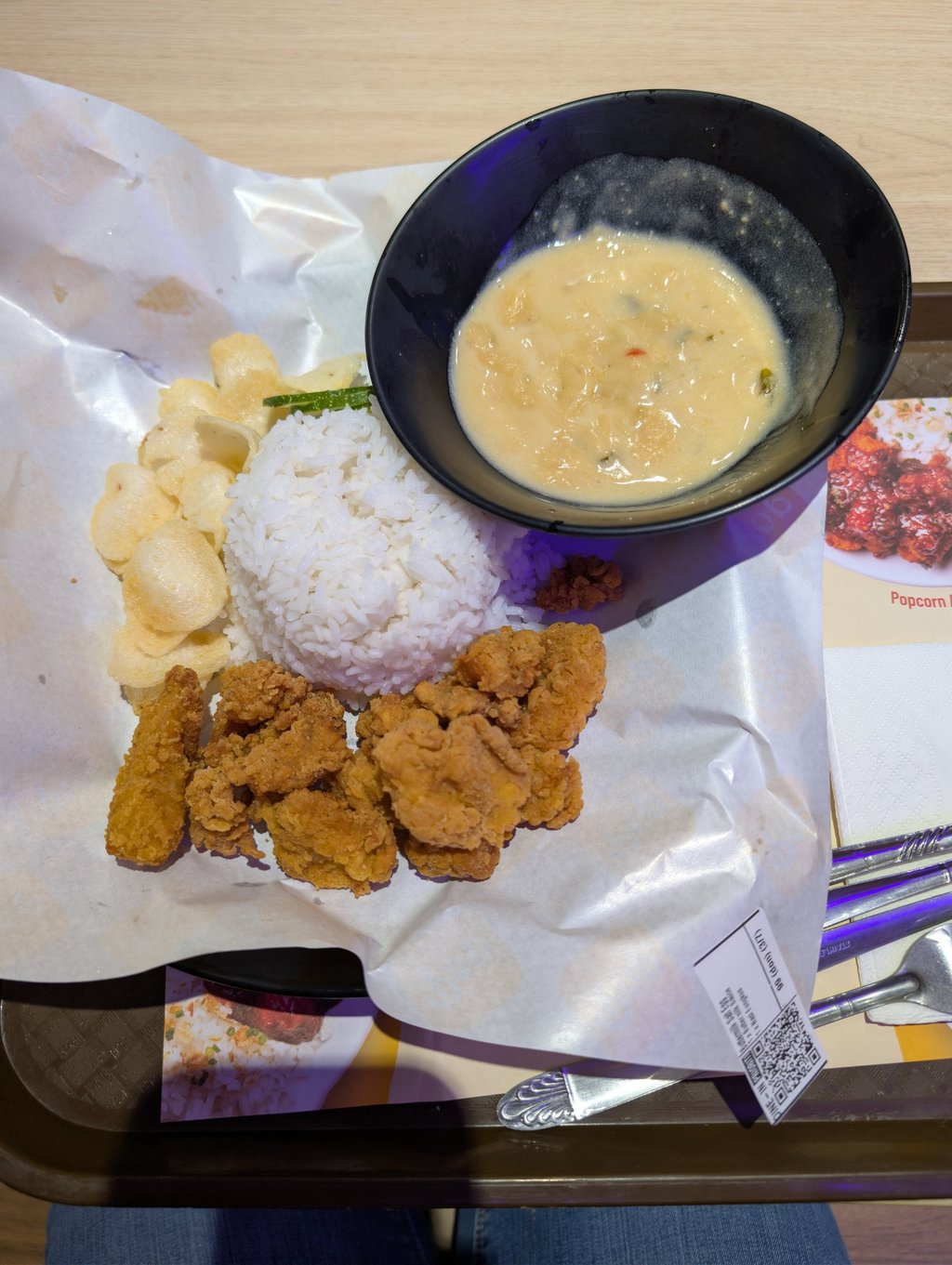
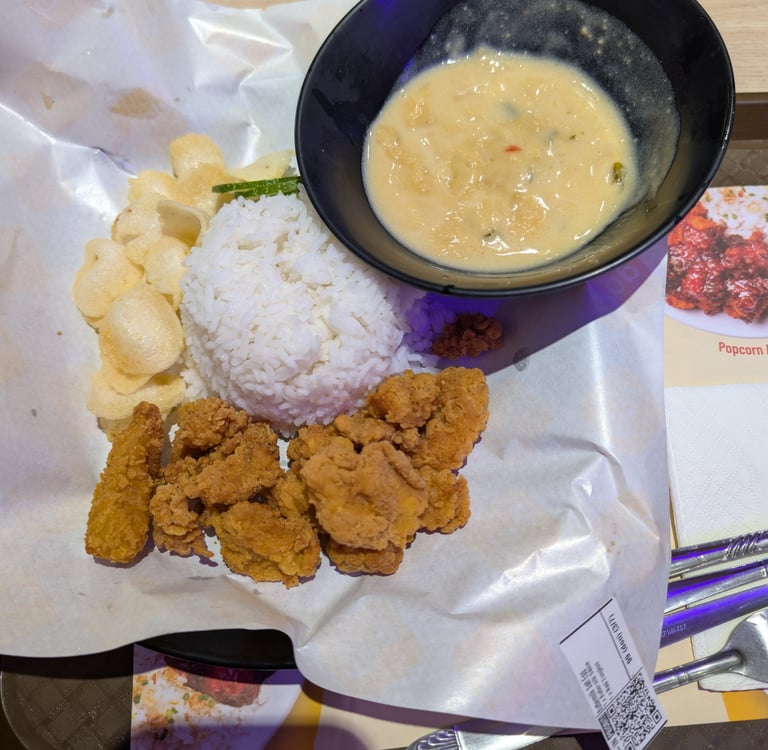
Ayam Gepuk
Salted Egg Buttermilk Chicken
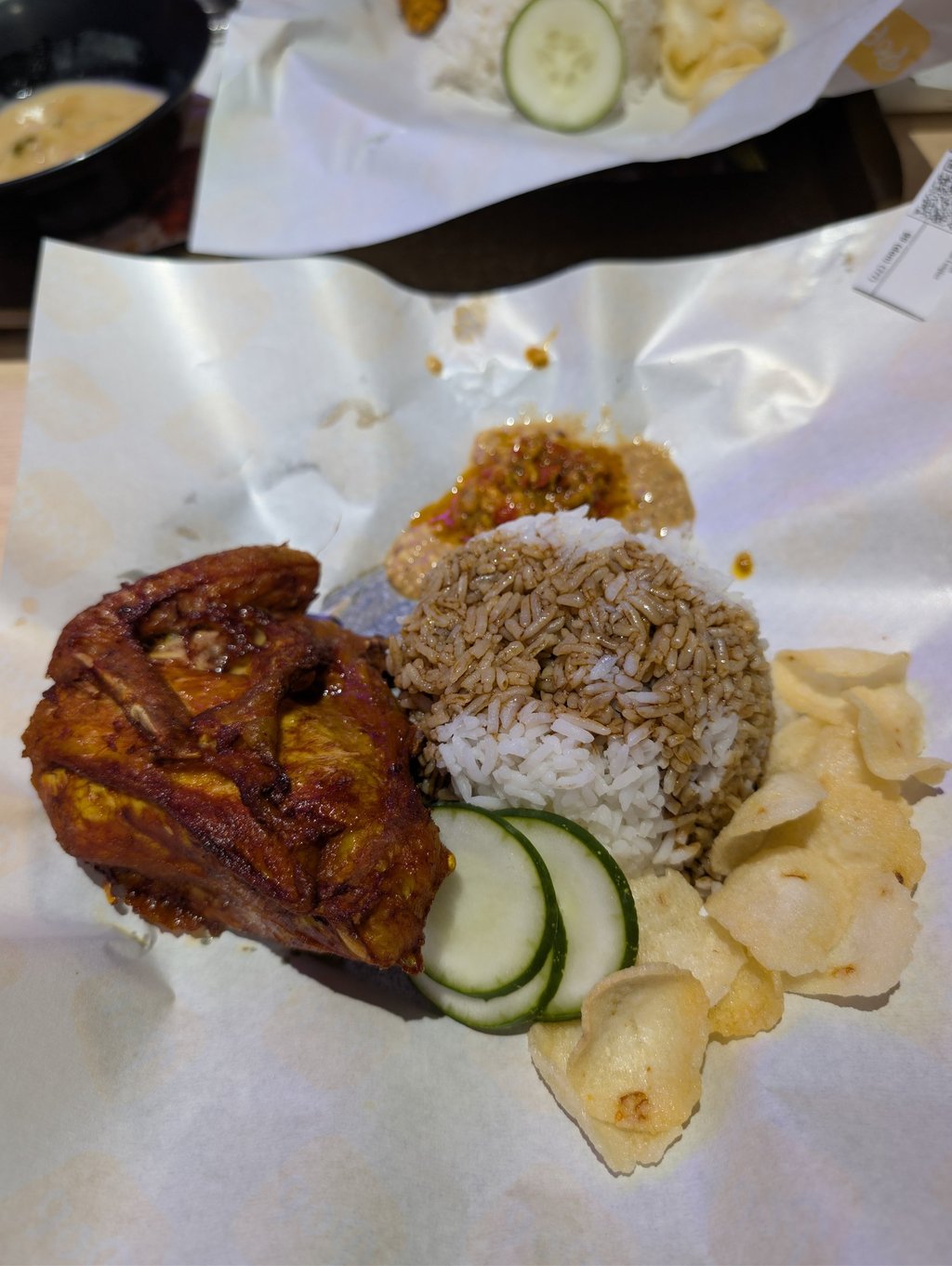
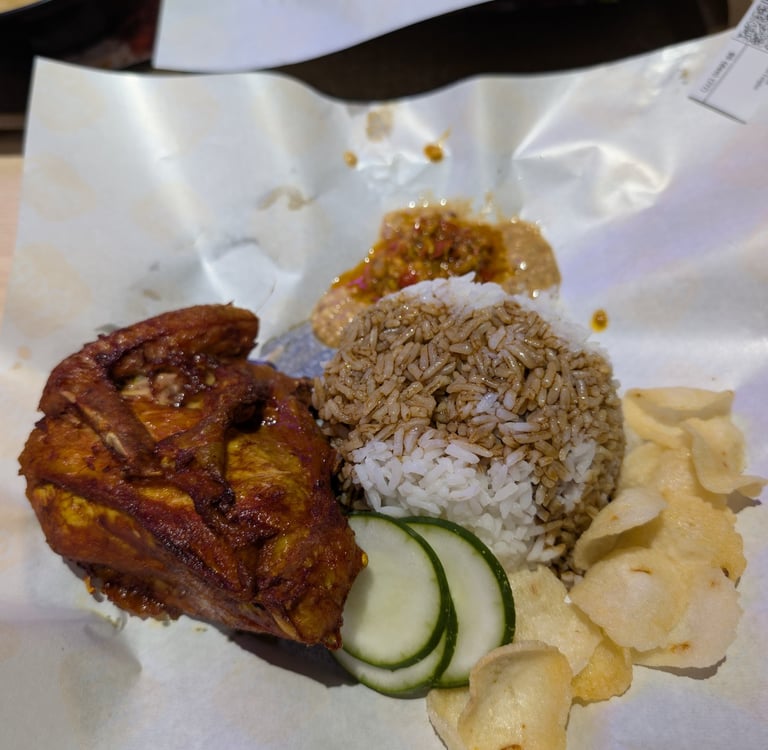
Kafe Ruuma @ Quill City Mall: This was another large Malaysian "fast food" restaurant in the Quill City Mall near the entrance to the NSK grocery store, probably our favorite large grocery store anywhere in the world. I put "fast food" in quotations because its of a higher quality than Western fast food joints. You still order at a counter but everything is prepared there, nothing out of weird warming drawers. We both got nasi lemak ayam gepuk pedas. This was a delicious quick meal before we went shopping. The restaurant was crowded with young locals. Everything was fresh and had great spice. For both, the cost was 21RM ($5.20 USD).
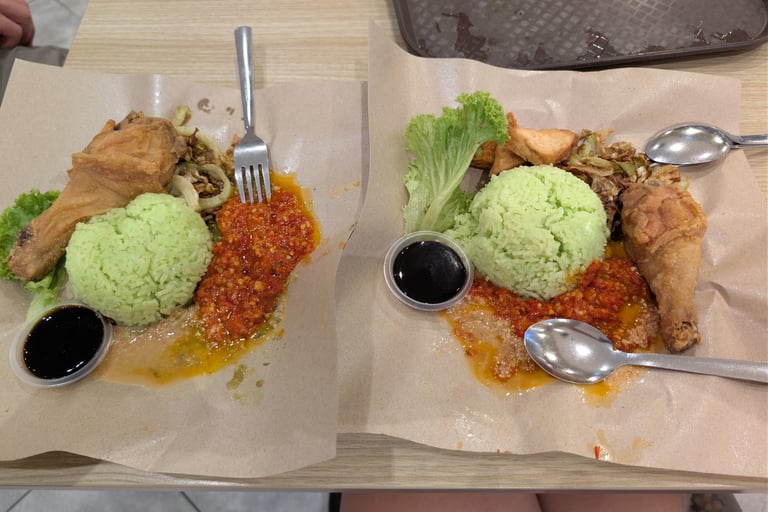
Nasi Lemak Ayam Gepuk Pedas
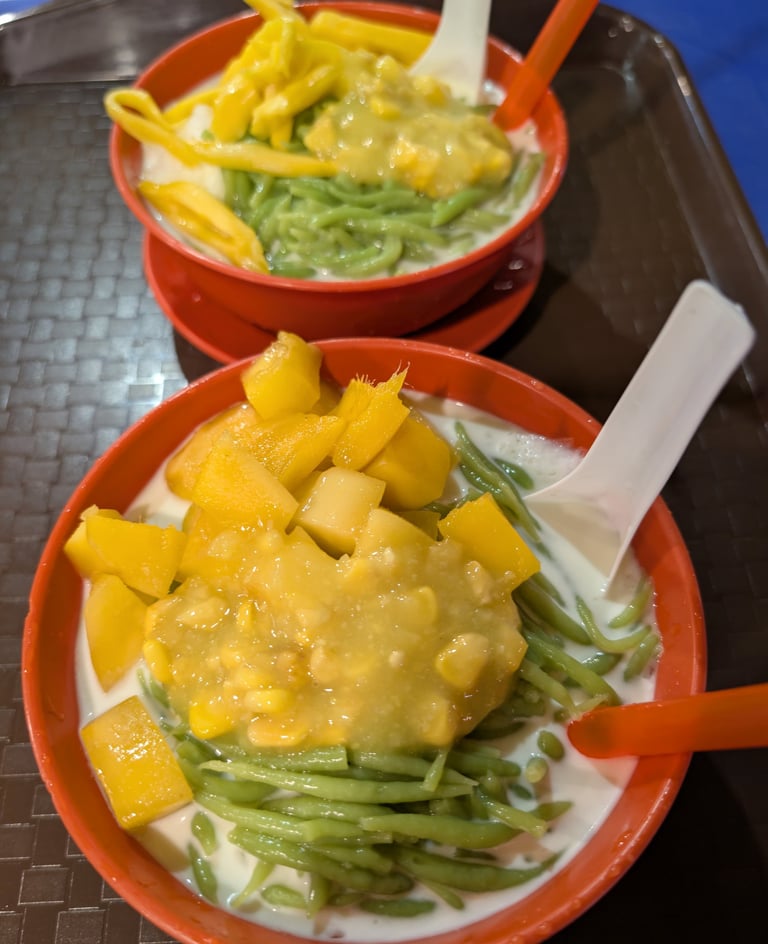
Mamam Place @ Lorong Raja Bot: Located in busy Chow Kit Night Market this dessert joint does business late into the night. Here we each had cendol, mine with mango and Don's with jackfruit. Cendol is a dessert made with coconut milk, shaved ice, pandan noodles, and a brown sugar syrup and topped with sweet and salty canned creamed corn. I'm not going to lie, I wasn't this big of a fan when I first took a bite. I dug in without stirring it and got a mouthful of coconut milk and salty corn, but I paid for it so I was going to eat it! But once I got it good and mixed it started to grow on me. The coconut milk mixed with the sugar syrup tasted like an American breakfast cereal, and the saltiness of corn faded after I mixed it in. I ended up really enjoying it, especially since it was 81° at 9 p.m.! Both cost 12RM ($3.09 USD).
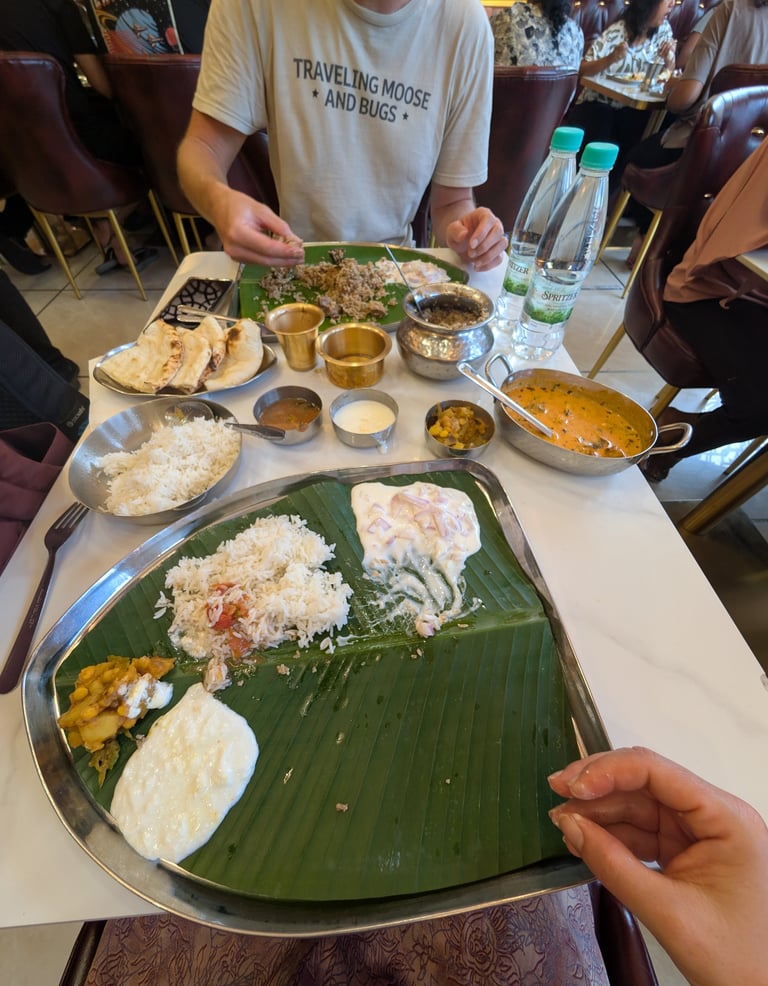
Erode Amman Mess: We went on New Year's Day around 2 pm, and there was about an hour wait, but it was definitely worth it! Don had mutton biryani, and I had tikka masala. We also had rice and several chutnies, an order of naan, and one masala tea. Everything was really delicious. We were offered silverware, but we chose to eat with our hands like everyone else. The staff was very friendly and patient while we took an extra minute to go through the menu. This is a great place to have lunch while you explore Brickfields. We both were really full even though the meat portion was a little smaller than similar restaurants. The total came to 67RM ($16.53 USD).
Kedai Kopi Dan Makanan Tai Kong: Located on the corner of Jalan Putra and Jin Raja Laut near the Sunway Putra Mall, this place was a little intimidating to enter but we figured it out quickly and it was so good we went twice. This open air restaurant has a number of different food stalls surrounding the perimeter. Pick out your favorite, place an order and grab a seat, they'll bring you the food and the check together once its ready. On our first visit we ordered mixed rice plates with pork and chicken. Both meats on the rice plate were delicious, flavorful, and moist and it came with a cup of broth and chili vinegar. The plates cost 24RM for both ($6.17 USD). Another hawker came to our table and asked us what we wanted to drink, we ordered off the large menu on the wall, a sour plum lemonade for Don and and an iced tea with lemon for me. Every vendor operates independently and we paid for the drinks when they arrived, 7.50RM ($1.93 USD).
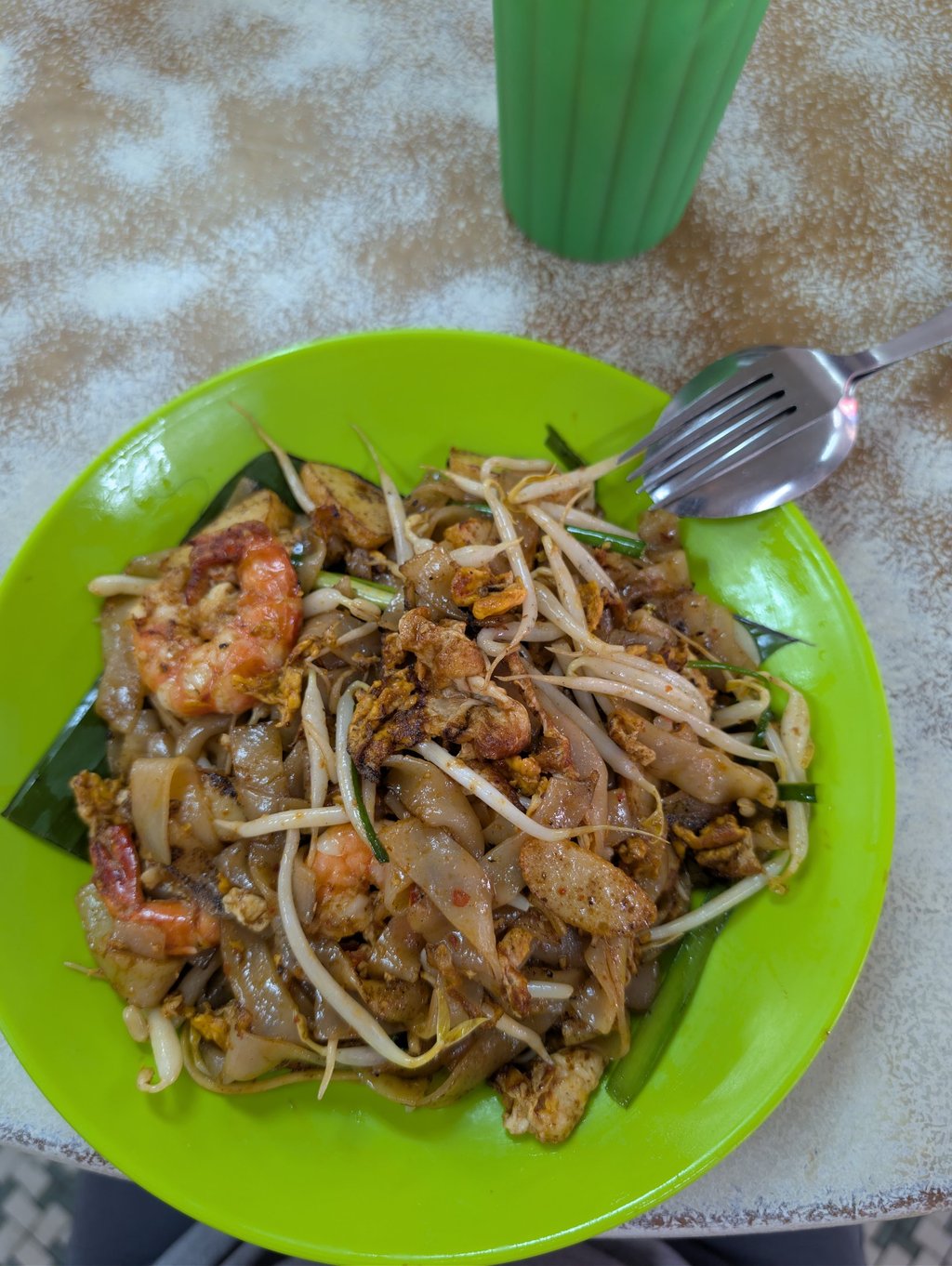
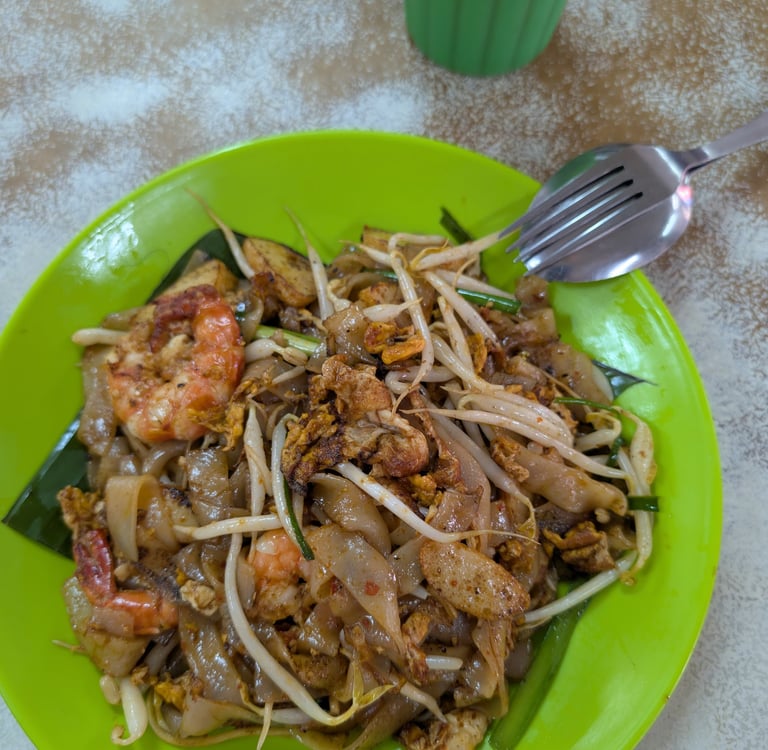
On our second visit we ordered char kuey teow. This noodle dish is a Chinese Malay favorite made with bouncy, wide rice noodles, shrimp, and eggs tossed with scallions and some veggies in a sweet and savory soy based sauce with the right amount of smokey wok hei. We requested spicy but neither one of us felt that it was, perhaps they thought we couldn't handle it, but it wasn't too sweet either so the flavors still balanced nicely. Two plates cost 18RM ($4.44 USD). This place was always packed with locals on their lunch break and we even shared a table with two gentlemen who helped us with our pronunciation of the names of the dishes. Fun, local and definitely delicious.
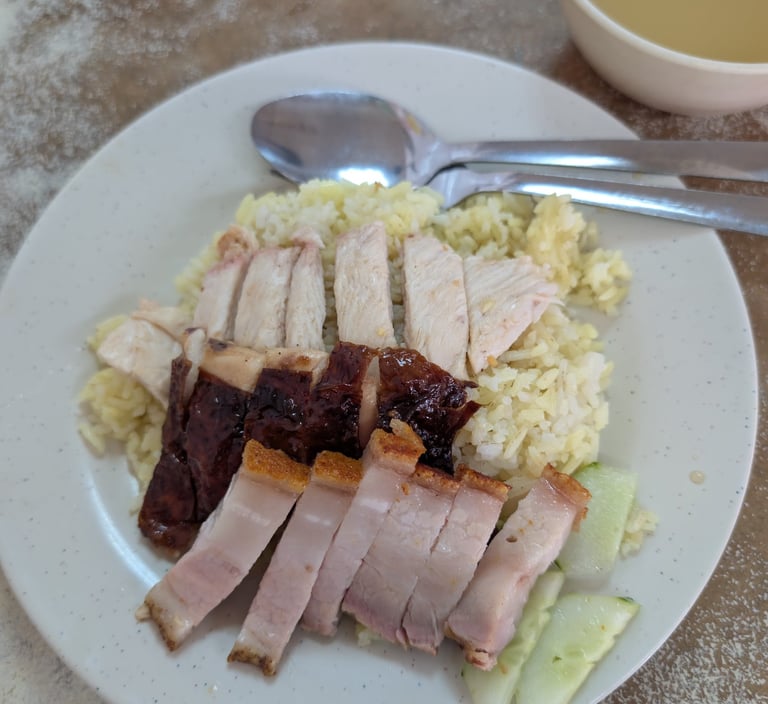
Mixed Rice with Pork and Chicken
Char Kuey Teow
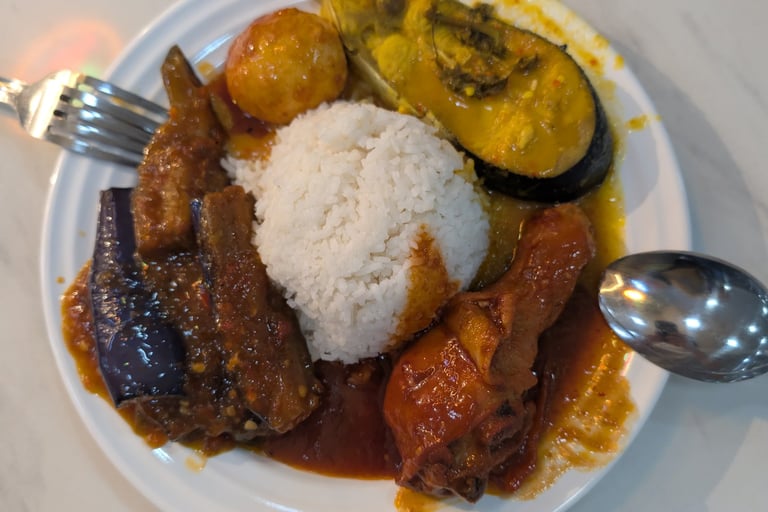
Restoran Hamza Cafe vs Kandar: We stopped here while visiting the Bukit Bintang neighborhood. There is a menu out front with lots of choices, but we learned the best way to order in these restaurants is to head to the cafeteria counter and choose whatever looks best! I chose rice with a piece of baked chicken that was in a sweet and spicy sauce with a hard-boiled egg, and Don had rice with spicy fried chicken, a piece of squid, and cucumber salad, and we both added all the sauces. We also both ordered teh o, Malaysian unsweetened iced tea. Everything was so delicious and flavorful, and the chicken was still moist. I honestly can't get enough of the food here. The total came to 51 RM ($12.58 USD).
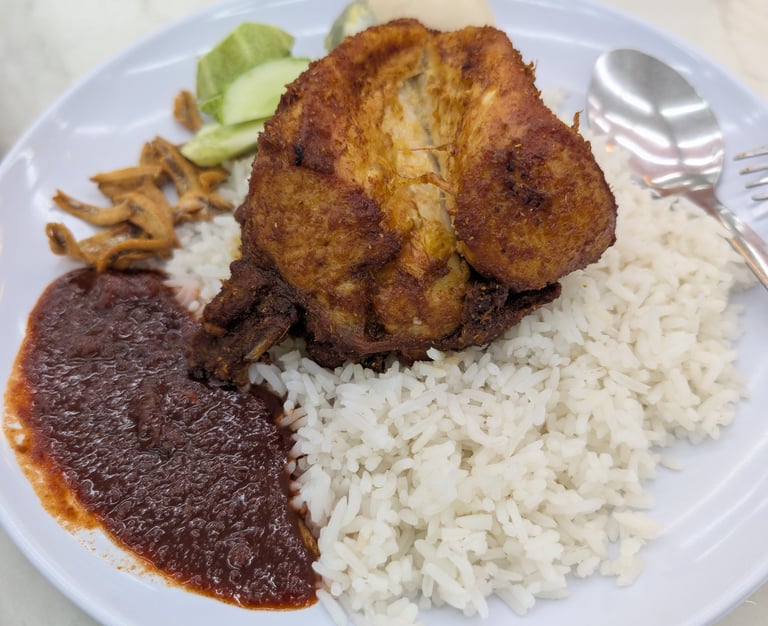
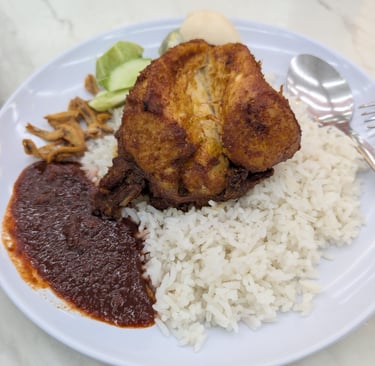
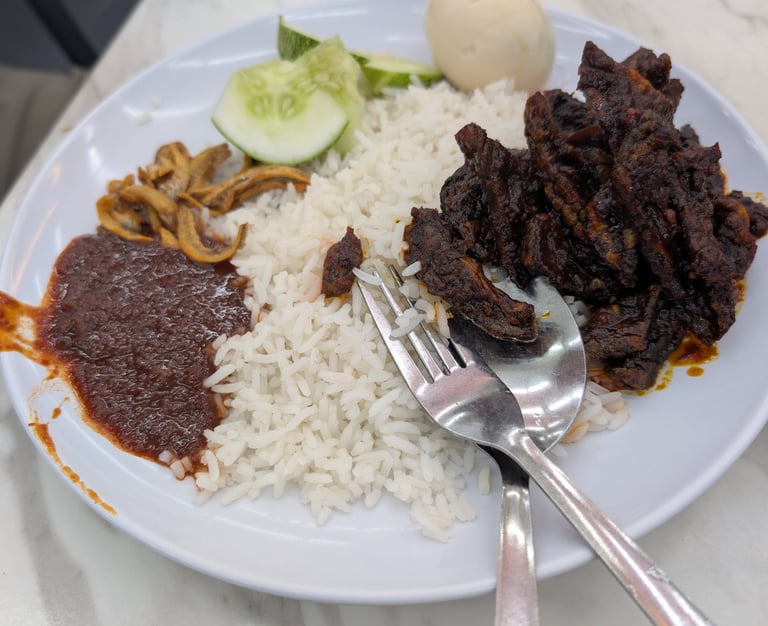
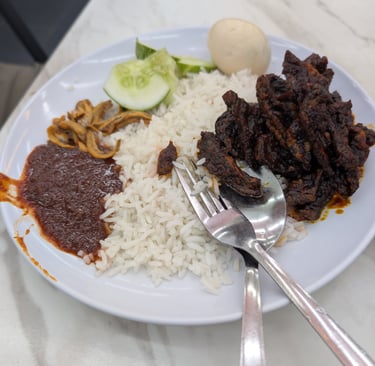
Nasi Lemak Wanjo Kg Baru: This place was amazing and packed with locals. There are two lines, one for takeout and one for dining in. For takeout, the nasi lemak is wrapped in a triangle banana leaf, which was tempting, but we decided to dine in. I had the nasi lemak ayam goreng, which is white rice cooked in coconut milk, sambal, dried anchovies, hard-boiled egg, and fried chicken (ayam goreng). Don had nasi lemak with beef lungs. Both were delicious and flavorful. The sambal is a little spicy as well as sweet and fishy. This is a national dish of Malaysia and a must try. We also shared a tea, the cost came to 23.32 RM ($5.74) for everything.
Top Sights You Can't Miss in Kuala Lumpur
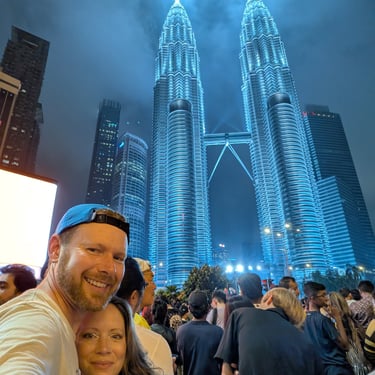
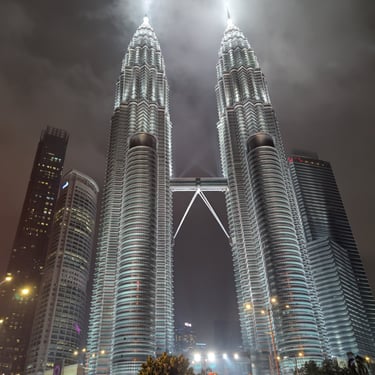
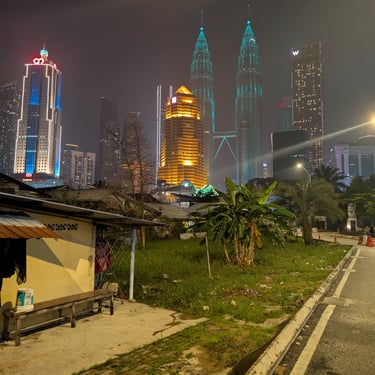
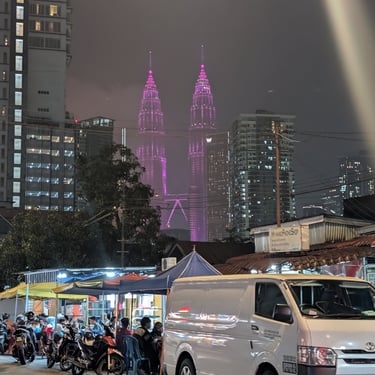
Petronas Towers: These impressive modern towers stand at 452 meters (1,483 ft) with 88 floors. Between 1998 and 2004, they were the tallest buildings in the world and are still the tallest twin towers ever built. We had the privilege of seeing these towers on New Year's Eve. We watched from the Golden Triangle KL, arriving a few hours early to get a good spot. If you are in Kuala Lumpur for New Year's, I highly recommend going there. It was an amazing experience watching the towers light up, followed by a firework show. You will need to walk there as thousands of other people also gather to celebrate, and traffic comes to a complete stop as the roads fill with pedestrians. It also took twice as long to leave because of the amount of people. If you are not there for New Year's, the Petronas Towers should still be on your list! If you have time, head up to the skybridge and observation deck for an impressive view of where the modern skyscrapers meet the historic neighborhoods of Kuala Lumpur.
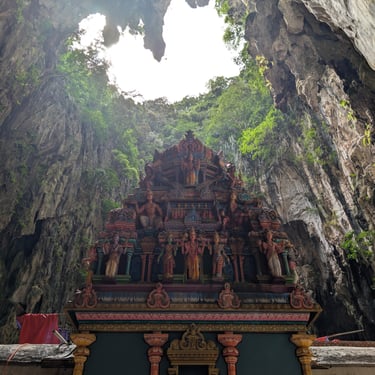
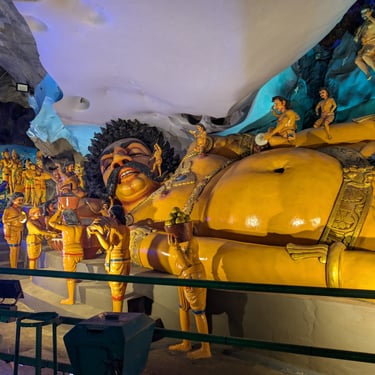
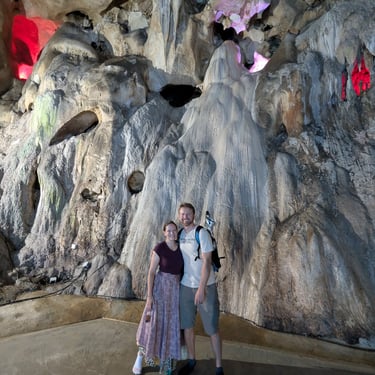
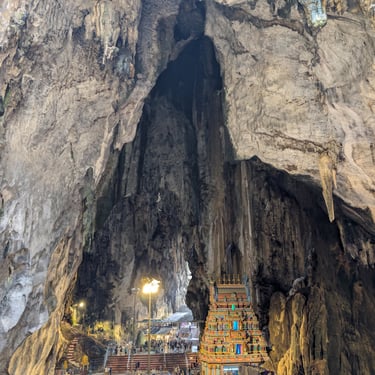
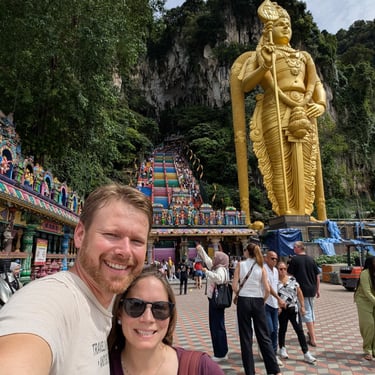
Batu Caves: I recommend going early and preferably on a weekday as it gets very busy and very hot in the later afternoon. It is free to climb the big colorful staircases to the main shrine but neighboring Ramayana Cave and several smaller shrines have entrance fees between 5-15 RM. Women need to have their knees and shoulders covered, there are wraps for rent but they are not free. This is a place of worship so please dress and act accordingly. We also went to Ramayana Cave, it cost 15RM per person ($3.86 USD). It's huge, wildly illuminated and colorful and definitely worth visiting. The cave tells the story of Prince Rama, who is a reincarnation of Vishnu. Be warned, there are a lot of steep stairs and it's hot and wet.
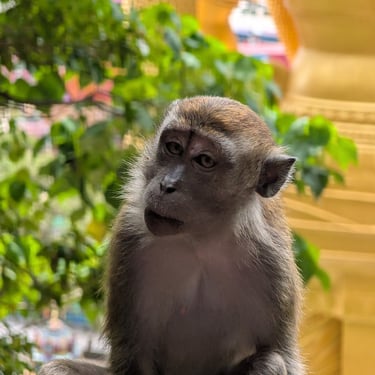
The climb up to the main temple was beautiful, but steep. We went in the morning to try and beat the heat, but we were still drenched in sweat. It is free to climb to the top, but if you want to go into the main temple, it is 5RM ($1.29 USD). I decided instead to receive a blessing, which cost 10RM ($2.57 USD). Macaque monkeys are abundant and we witnessed them stealing from people, so watch your stuff! We did read you're not supposed to feed the monkeys but a lot of visitors did. I even saw vendors selling bananas to feed them. There are bathrooms there for 1RM (.26 USD), ask for toilet paper as there isn't any in the stalls. I also highly recommend getting a fresh coconut for 7RM ($1.80 USD). After you finish the refreshing liquid, they will cut it open so you can scoop out the delicious meat. This was a much needed treat after the sweaty climb to the top of the temple.
Getting There- It cost 2.50RM (.64 USD) for the train from Putra on the KTM Komuter line, this is a central line and can be boarded at KL Sentral Station and many other convenient stops.
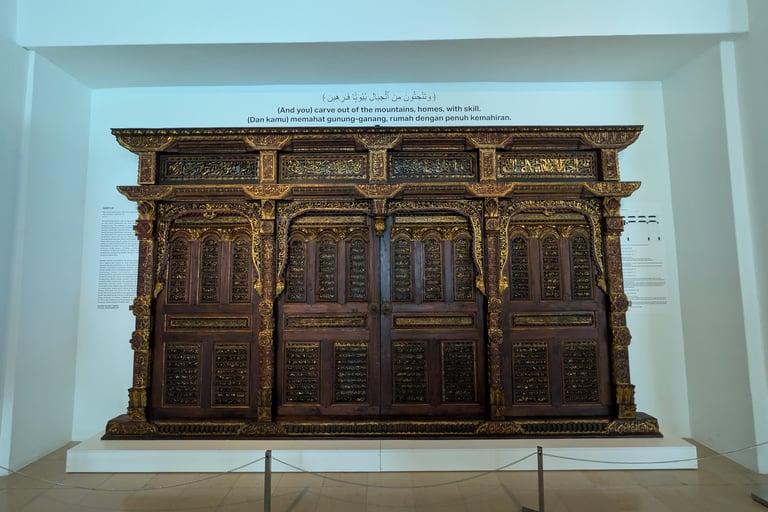
Islamic Arts Museum Malaysia: The Islamic Arts Museum Malaysia is a must visit destination for art lovers, history buffs, and curious travelers alike. Opened in 1998, this museum has grown to become the largest Islamic art museum in Southeast Asia, showcasing an extraordinary array of objects that span over a millennium and stretch across continents. The price is 20 RM ($5.14 USD) per person. We enjoyed learning more about Islamic and Malaysian history as well as seeing many miniature replicas of mosques we had seen while traveling in Uzbekistan and Türkiye.
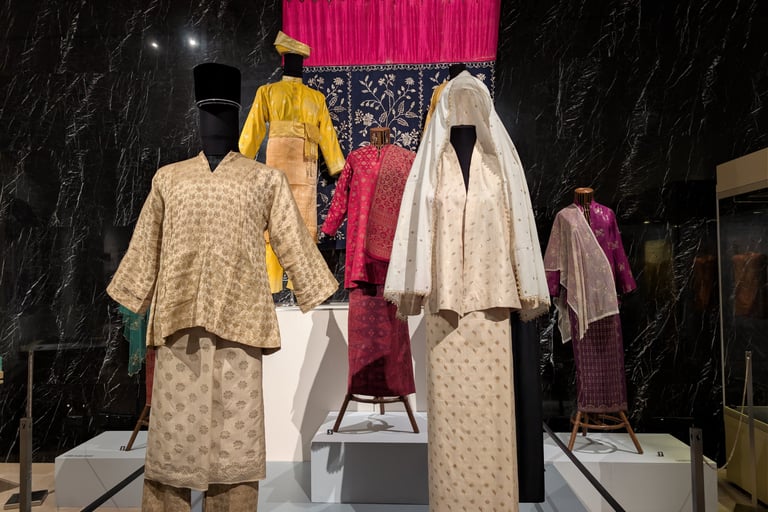
Traditional clothing
19th Century Javanese Gebyok Engraved with the 99 Names of Allah
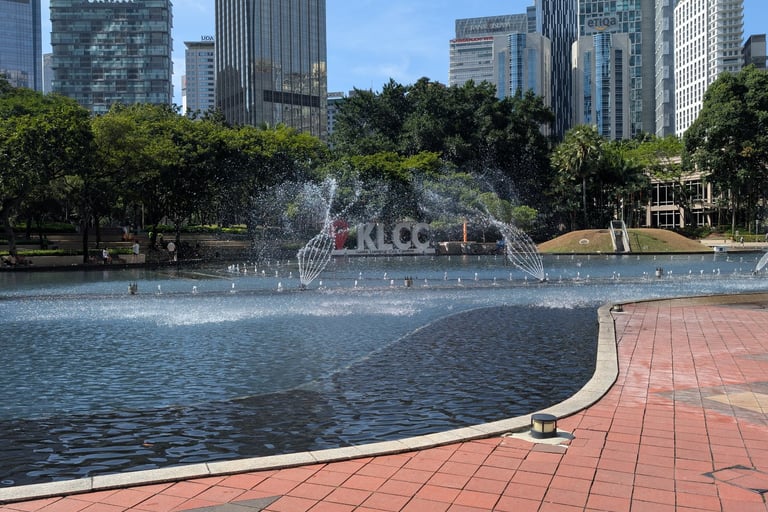
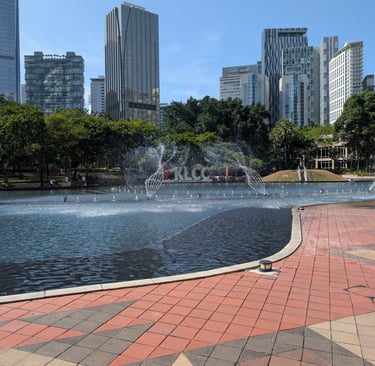
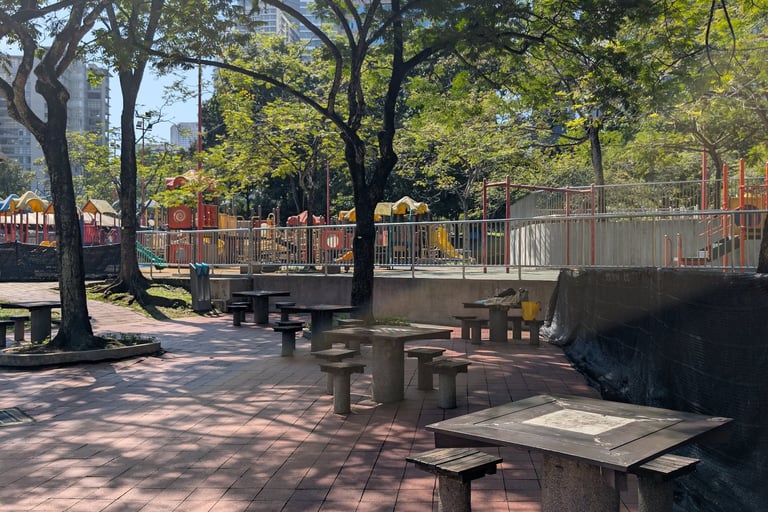
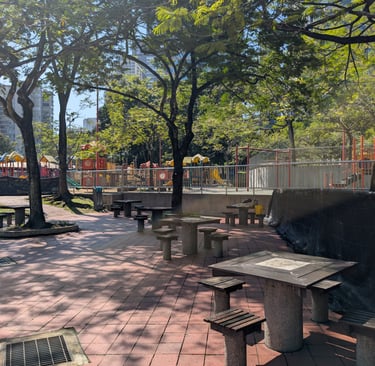
KLCC Park: This little oasis is in the heart of downtown. Its a great place to come and sit in the shade and enjoy the songs of the tropical birds. There are lots of places to sit, a wading pool for children under 12 to cool off in, as well as an expansive playground for children. The wading pool is open Tuesday-Sunday from 10 a.m. to 7:30 p.m. There are also informational signs to learn about the different plants in the park. We saw many families enjoying picnics and just hanging out in the shade. There are also free public restrooms with changing rooms and showers, as well as a public drinking fountain by the restrooms. There is a running path and workout equipment, this park really has it all!
Chow Kit Market: This is a huge market that we unfortunately didn't really shop at. It's broken up into three different sections: one for fruit and vegetables, another for dry goods, and another for meat and seafood. Everything was so fresh, and the people were so welcoming. I only wish we had discovered it sooner and shopped here more, but the impressive and amazingly affordable hypermarkets in the mall, especially the NSK, were a new convenience that was hard to escape (more on that below).
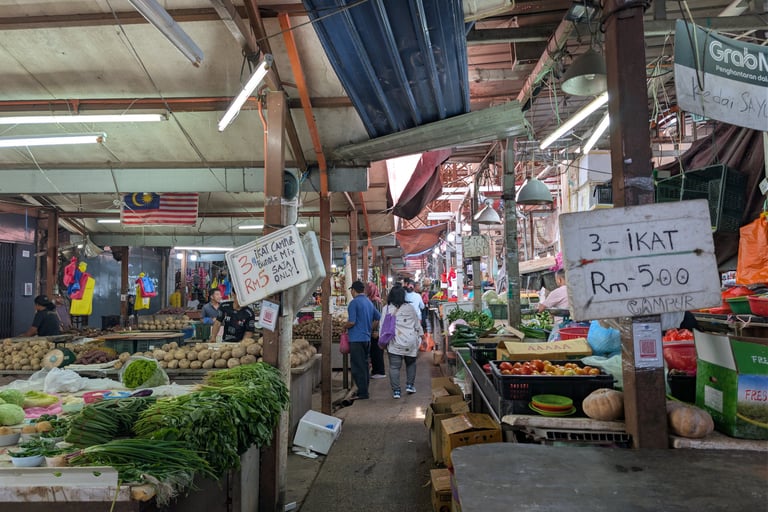
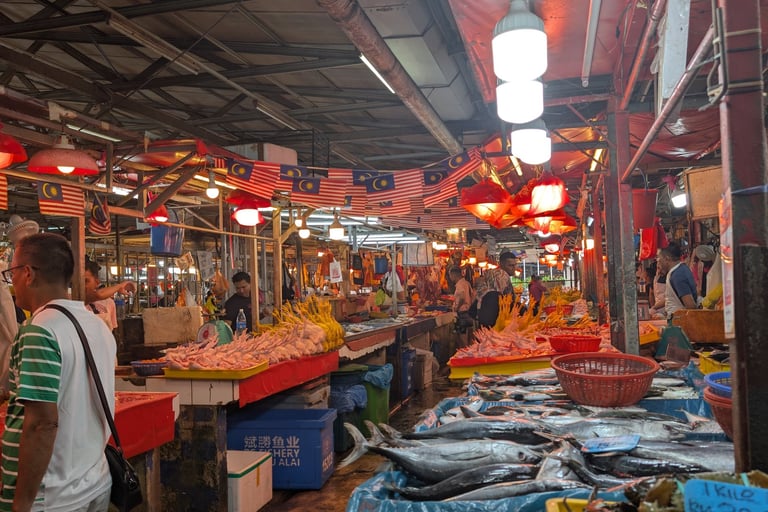
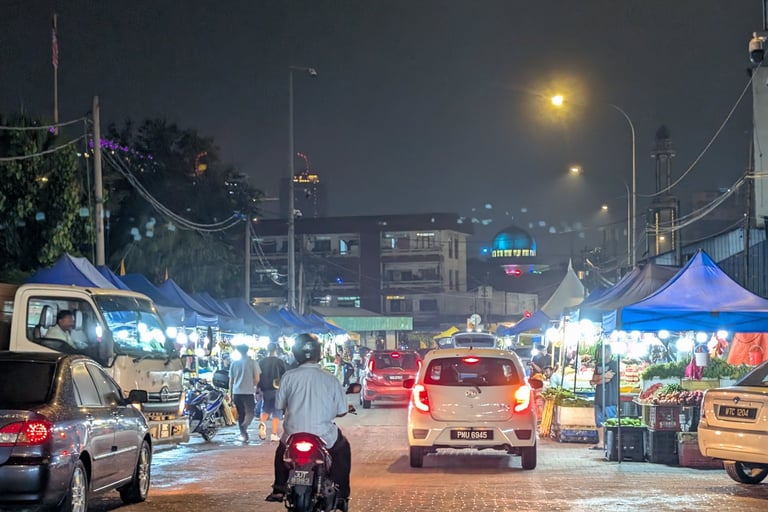
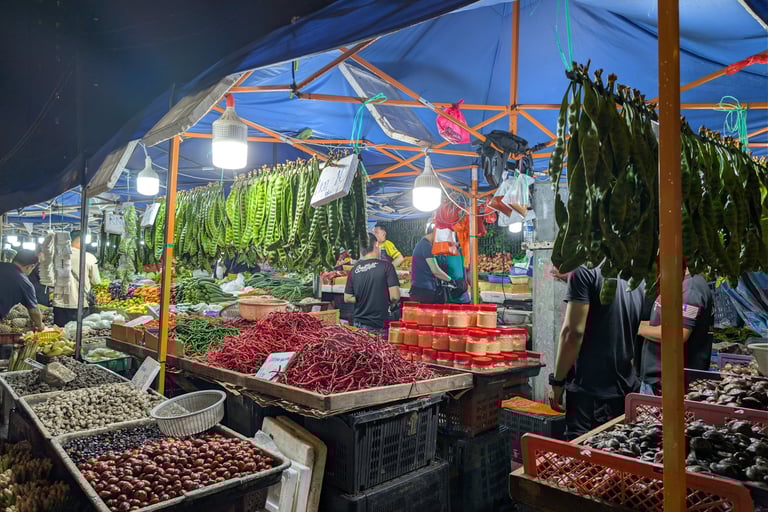
Chow Kit Night Market: A lively market with a little bit of everything. We were surprised to find fruit, vegetables, and meat vendors. Many food stalls with desserts and lots of durian stalls.
Shopping Malls and Hypermarkets in Kuala Lumpur
Kuala Lumpur is widely known as a shopping capital of Southeast Asia, and it lives up to that reputation with its impressive mix of modern hypermarkets and sprawling malls. Just within a few square miles of our apartment, we were surrounded by several huge shopping centres, each offering its own unique selection of stores, dining, and experiences.
Right next door to our apartment was Sunway Putra Mall, a large and well equipped shopping center with just about everything you could need. It offered a wide selection of retail stores, plenty of restaurants (like Pop), and a higher end grocery store that was slightly more expensive than others in the area.
Just a short 25 minute walk from our home was Quill City Mall, home to the NSK grocery store, our go to spot for most of our food shopping. The store is enormous and offered some of the lowest prices we’ve seen, anywhere in the world. Everything was well organized, easy to navigate, and consistently fresh, which made shopping there a simple and reliable experience.
It might seem strange to write so prolifically about what amounts to a large grocery store but I really can’t emphasize enough how impressive the NSK was. We had never before seen so many varieties of vegetables and fruits offered in a single store, there was even an entire counter dedicated to just durian, with its own staff ready to weigh and chop open your durian right before your eyes. And then there was a seating area to eat it! (Remember trains and buses typically prohibit carrying durian due to their pungent smell.) And I haven’t even mentioned the seafood and meat, from live crawfish to fresh local buffalo meat, it was a carnivore's dream, if you can live without pork that is. This remains the most impressive grocery store to date, especially if you consider the prices.
Beyond the supermarket, the mall also features a wide range of retail shops and restaurants, making it a convenient place to pick up essentials, grab a meal, or just explore a bit.
Book a Tour Through Viator
Save your energy for what really matters and leave the planning up to the professionals. Explore the vibrant city of Kuala Lumpur with unforgettable experiences from Viator. From the iconic Petronas Twin Towers to bustling street markets and mouthwatering local cuisine, there’s a tour for every kind of traveler. Skip the hassle and book with confidence: expert guides, seamless planning, and memories that last long after your trip ends. (Click on any of the trips below to see the full range of offerings.)
What Sites to See in China Town
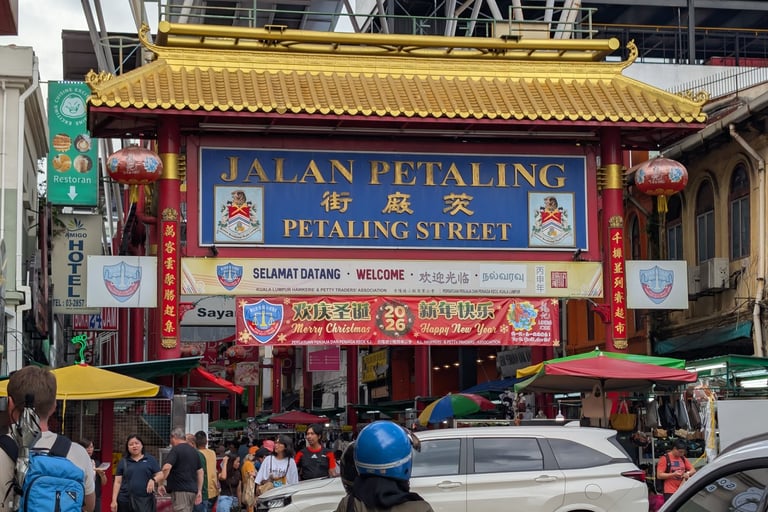
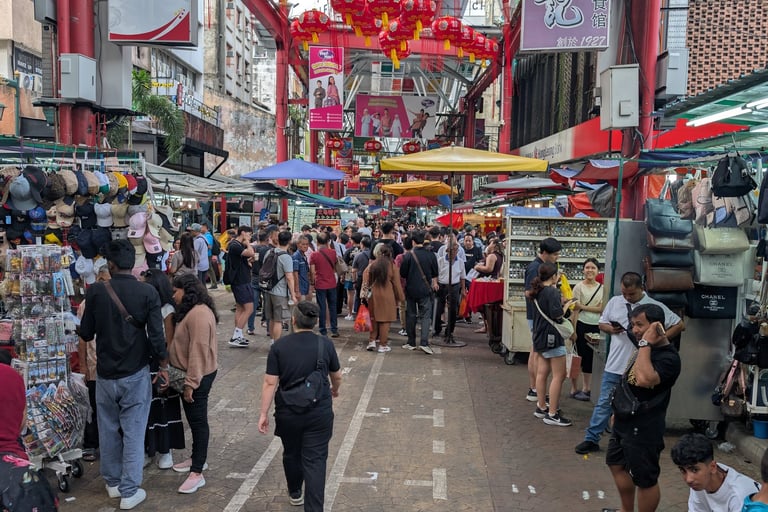
Petaling Street: This bustling street is known for its haggling vendors, amazing street food, and its imitation goods, anyone need a Prada handbag?Remember, if the price looks too good to be true, it probably is. We enjoyed wandering the alleys, looking at what everyone had to offer while the vendors shouted bargains and tried to entice you to take a closer look. This is an area where you will need cash, most vendors do not take credit cards, and be prepared to negotiate.
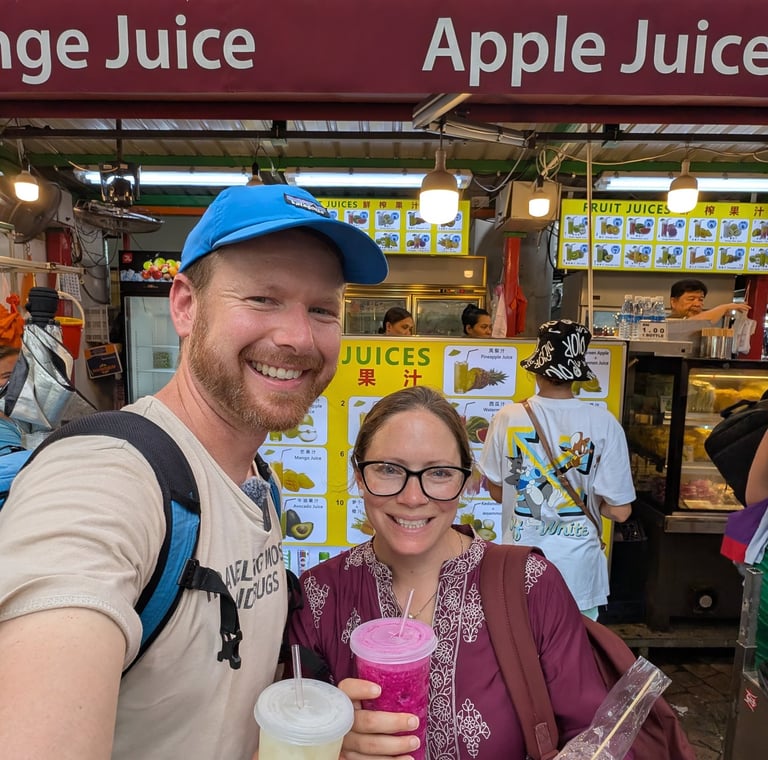
Fruit Juices: This place had the most delicious fresh juice. You can tell the juice was made with fresh fruit, and I was surprised how big the cup was. Don had the honeydew, and I had a blend of pineapple and dragon fruit. This was the first time Don had honeydew melon juice and he said it changed his life! It was 6RM per juice ($1.54 USD).
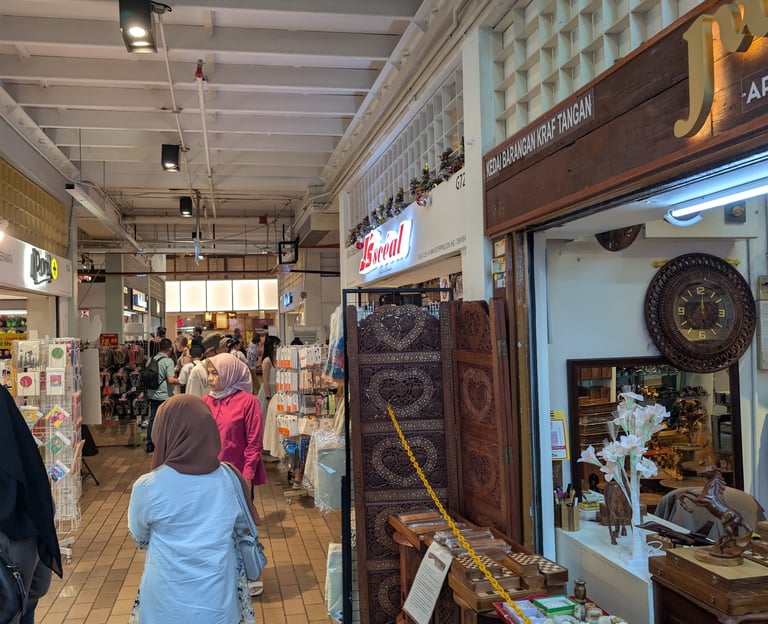
The Central Market: A historical market originally built in 1888 as a wet market. Here you can find Malaysian crafts, art, cultural pieces, as well as souvenirs. The building is air conditioned, so it's perfect for a hot afternoon! There is also a bathroom inside that costs 0.50 RM (.13 USD).
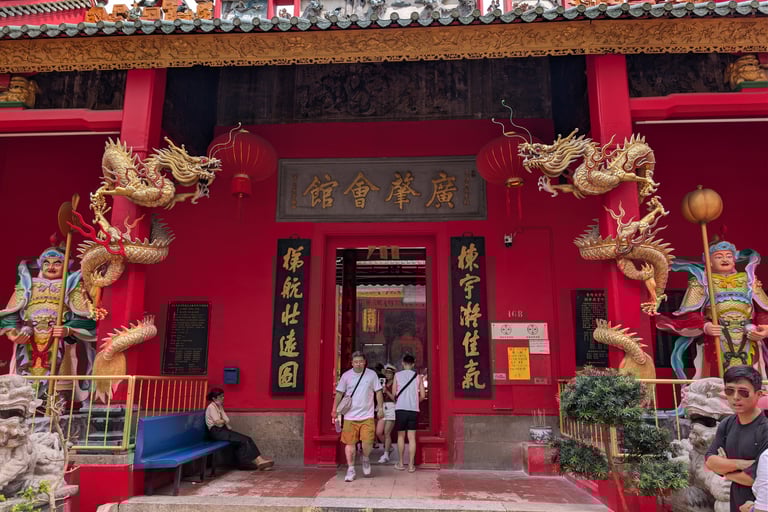
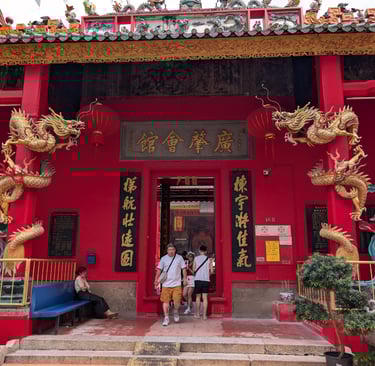
Guan Di Temple Chinatown Tun H.S. Lee: Right in the heart of Chinatown, sits one of the city’s most atmospheric and spiritually powerful landmarks. Dedicated to Guan Yu, the legendary Chinese general known for loyalty, courage, and righteousness, the temple attracts both devotees and curious travelers. Inside, you’ll find a striking red faced statue of Guan Yu holding his iconic Green Dragon Crescent Blade, a powerful symbol of integrity and protection.
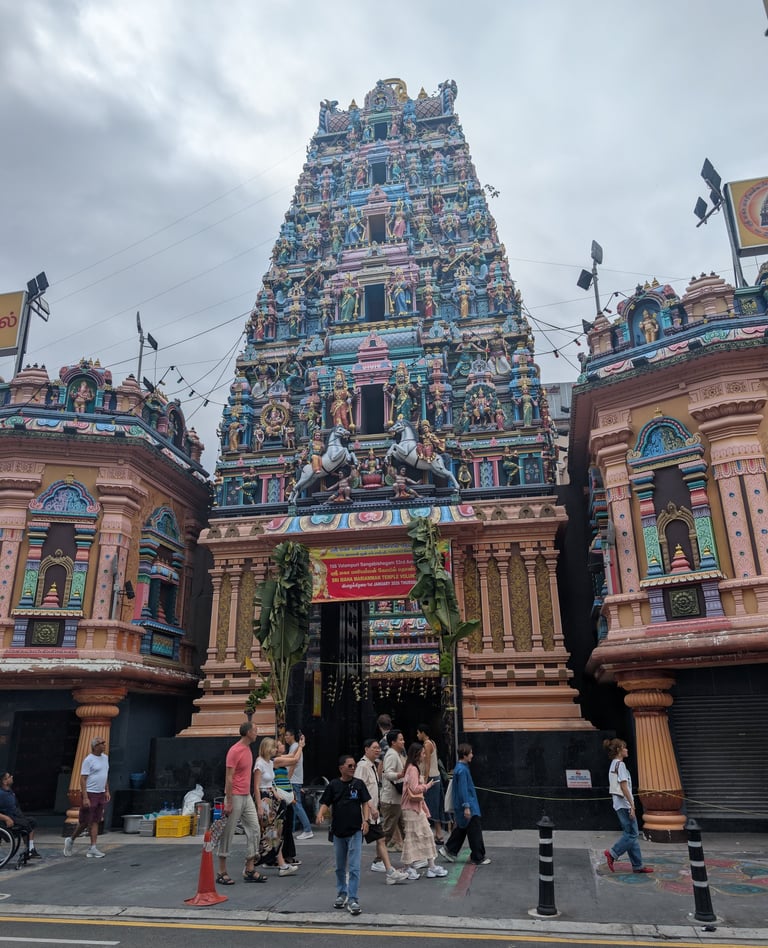
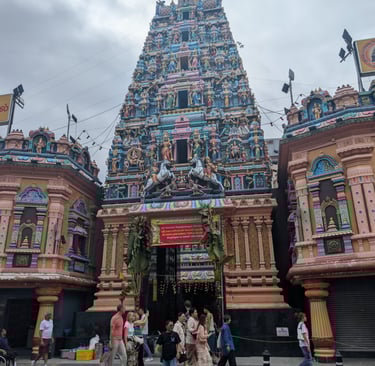
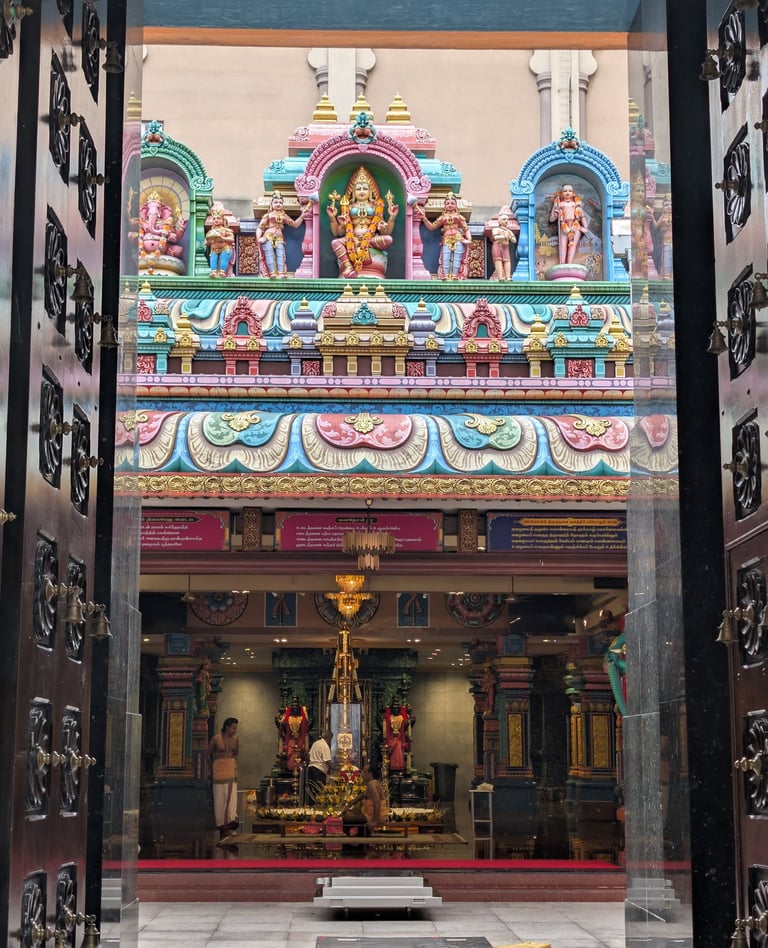
Sri Maha Mariamman Temple: Standing proudly at the edge of Chinatown, along Jalan Tun H.S. Lee, the Sri Maha Mariamman Temple is the oldest Hindu temple in the city, and one of its most visually striking landmarks. Founded in 1873 by Tamil immigrants, the temple has long been a spiritual anchor for Kuala Lumpur's Indian community. Before entering, you must take your shoes off. You will pay to have the attendant hold them for you; I can't remember how much, but it wasn't a lot.
Brickfields: Highlights of Little India
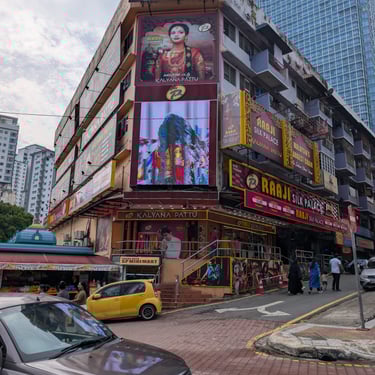
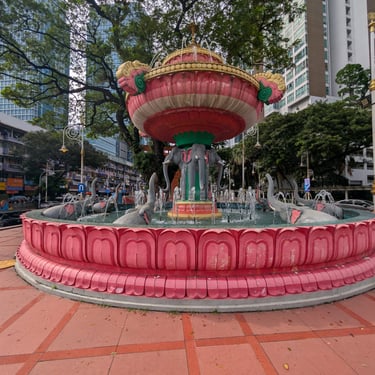
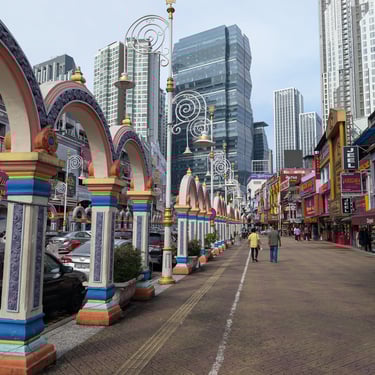
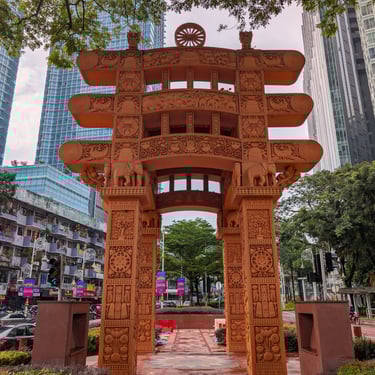
Brickfield Little India: Tucked just a couple of kilometers south of Kuala Lumpur’s bustling city center, is Brickfields, affectionately known as Little India. This is where Malaysia’s rich Indian heritage radiates in all its color, sound, and spicy glory. This lively neighborhood, centered around Jalan Tun Sambanthan, feels like a slice of India in the heart of Kuala Lumpur. Named after the literal brickfields built here in the late 19th century, this neighbor is home to much of KL's south Indian community.
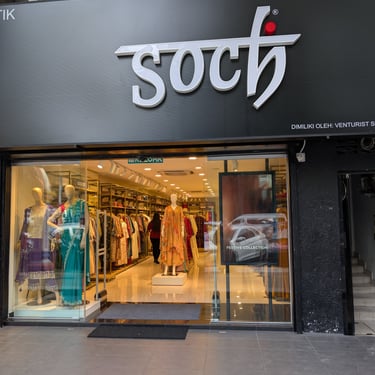
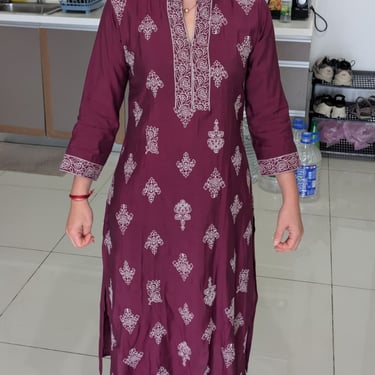
We enjoyed walking through its bustling streets and window shopping at its many silk kurta shops. I bought my kurta here at Soch, and we enjoyed a delicious meal at Erode Amman Mess, a must try restaurant. In the center, you can see the beautiful Brickfields Arch as well as the Little Indian Fountain. The Brickfields Arch symbolizes the gateway into Little India, reflecting southern Indian culture, while the fountain represents life, prosperity, and the vibrant spirit of the neighborhood.
How to get to Kuala Lumpur Center from the Airport
Bus to KL station: Follow the signs through the airport to the bus; you can buy your tickets right by the bus pickup point. There's a great cafeteria next to where you buy tickets. The bus is nice with comfortable seats, but there is no bathroom, no Wi-Fi, and the hour long bus ride ended up taking 2 hours, though I'm not sure if that's normal. 15 RM per person ($3.86 USD)
Where to Stay in Chow Kit
Regalia Comfort Suites KLCC
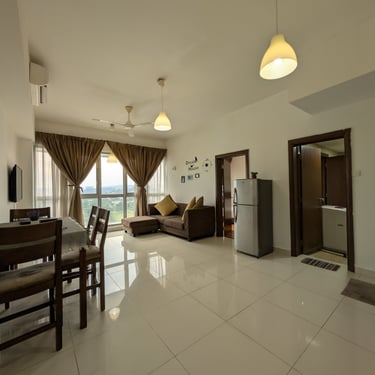
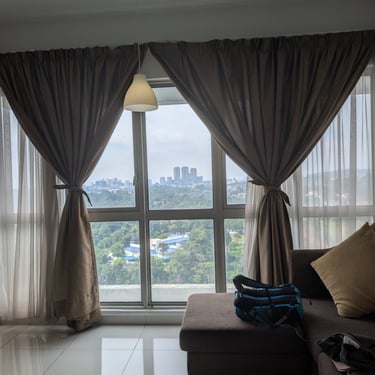
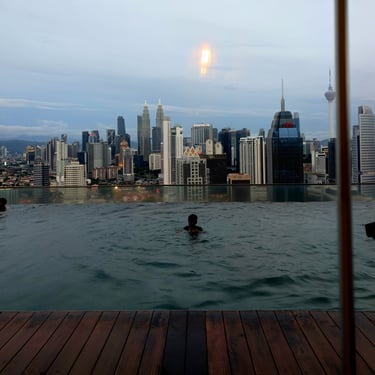
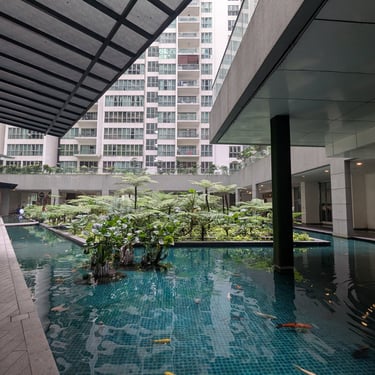
Where we stayed: We rented a one bedroom apartment at the Regalia. We wanted to be in a high rise building with a view, and this was a great price. This building is in the Chow Kit neighborhood, about a mile from the city center, but it's only a few minutes' walk to the train station, so it was really easy to get anywhere. There are also a lot of great restaurants right nearby. The Regalia had a beautiful courtyard and two convenience stores located in the lobby, as well as two pools, one of which is an infinity pool located on the 37th with an amazing view of the city as well as the Petronas Towers. At night from our room we could see the beautiful lights of the city, which was a real treat. To be honest, the room was a bit dated and in need of repairs, but it was big and clean, and the kitchen had everything we needed. For us, it was all about the experience of being in a high rise building with a city view without breaking the bank. If you are arriving by train, the entrance is a bit confusing to get to on foot. Exit Putra train station on the left and cross the street, after you cross the bridge you will see a staircase on your right, go down the stairs and head straight, you will see the parking garage on your left, enter though there and check in and the guard and he will tell you where the elevators are. If you are in a car or taxi, they will drive you to the 4th floor lobby where you will check in.
Not Sure Where to Stay? Try Trivago
Trivago takes the guesswork out of booking by comparing the prices from all the major booking sites with one easy click. Try out our search bar below to find your next stay!
Helpful Phrases in Malay
Hello / Hi: Selamat (seh-lah-maht)
Good morning: Selamat pagi (seh-lah-maht pah-gee)
Good afternoon: Selamat tengah hari (seh-lah-maht tun-gah hah-ree)
Good evening: Selamat malam (seh-lah-maht mah-lahm)
Thank you: Terima kasih (teh-ree-mah kah-seeh)
You’re welcome: Sama-sama (sah-mah sah-mah)
Please: Tolong (toh-long)
Excuse me / Sorry: Maaf (mah-ahf)
Yes / No: Ya (yah) / Tidak (tee-dahk)
How much?: Berapa? (buh-rah-pah)
Where is the bathroom?: Di mana tandas? (dee mah-nah tahn-das)
I don’t understand: Saya tidak faham (sah-yah tee-dahk fah-hahm)
How to say one through Ten in Malay
One: Satu (sah-too)
Two: Dua (doo-wah)
Three: Tiga (tee-gah)
Four: Empat (um-paht)
Five: Lima (lee-mah)
Six: Enam (uh-nahm)
Seven: Tujuh (too-joo)
Eight: Lapan (lah-pahn)
Nine: Sembilan (sem-bee-lahn)
Ten: Sepuluh (seh-poo-loo)
Helpful Travel Tips for Visting Kuala Lumpur
Visa: U.S. citizens do not need a visa for tourist or business visits to Malaysia of 90 days or less. Complete the official (not some third party site with a fee) Malaysian Digital Arrival Card HERE for free within 3 days of your arrival.
Pedestrian friendly: Yes, there are lots of sidewalks and pedestrian crossings.
Water safe: We were told not to drink the water, but we used it to wash vegetables, make tea, and we did drink iced drinks when out.
Language: While Malay is the official language of Malaysia, it's a multilingual country. English is widely spoken here, especially in business, so we didn't even have to use Google Translate that often. Other common languages include Mandarin, Cantonese, Hokkien, and Tamil, depending on the neighborhood you're in.
Maps: We used Google Maps for walking and public transportation directions.
Public transportation: We took three different train lines here, and they all operated a little differently, though they were easy to navigate.
KMT Komuter Line- You can use your credit card to tap on and off, most major international cards like Visa and Mastercard are accepted. The stations have free bathrooms (bring toilet paper), . This train is often late, sometimes a full hour behind, so if you have somewhere you can't be late too leave very early or consider other transportation.
LMT Line- You can use your credit card to buy a token at the machine, then scan the token to enter the platform. We accidentally transferred trains once without paying to get to the final station so when we went to leave the gates, the gate said "token not valid.” We had to go to the booth right next to the gate, and they adjusted our fare. It cost 1RM (.26 USD) each, then we could leave. It was cash only for the fare adjustment.
Monorail- You can use your credit card again to buy a token at a machine in the station. Tap the token to enter and deposit it into the slot when leaving.
Trash cans: Yes, there are trash cans throughout the city.
Bathrooms: There are free toilets in the train stations, as well as some paid ones around the city with an average cost of .20RM (.05¢ USD). I always recommend carrying your own toilet paper, as many places do not have any.
ATM: The airport has a fee free ATM from CIMB Bank. There is also one on the basement floor of the Putra Sunway. Credit cards are widely accepted, but you will need cash for some smaller vendors.
SIM card: I used an eSIM from Airalo again, use my code SAMANT0923 to receive $3 off your first purchase. I've been really happy with their service and price. 30 days and 5GB was $12 USD. For more information about eSims click HERE. Don bought a SIM at the airport from Hotlink. He bought this one because it's also good in Thailand. The service was valid for 30 days, with unlimited data costing 75RM ($18.47 USD), but he was unable to top up his account with a foreign credit card.
Thank you for taking the time to read our blog, your continued support means the world to us! If you haven't already, please sign up for emails so you can stay up to date. And remember, step out of your comfort zone when you travel; try new foods, stay in traditional accommodations, try and speak the native language, even a few phrases is appreciated, talk with strangers, accept invites into their homes, and leave the tourist districts whenever possible. If you're not embracing their culture and their way of life you're missing the most rewarding experiences traveling has to offer!

Meet the Author
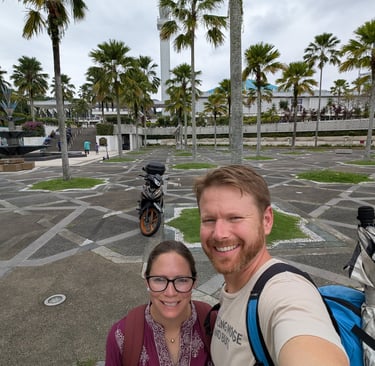
Hi! I’m Samantha Matthews-McCarty, and at 39 I changed careers, leaving construction behind to follow my passion for exploring the world and becoming a travel blogger.
Ironically, writing was probably the last thing I ever imagined myself doing. As a kid, I struggled with undiagnosed dyslexia, which meant reading and writing were frustrating enough that I wanted absolutely nothing to do with either. It wasn’t until my late teens that I discovered I actually loved reading. And somehow, all these years later, I’ve gone from avoiding writing to finding a passion for sharing our adventures through it.
Now, I document our travels through history, culture, food, hiking, and plenty of outdoor adventures, sharing the good, the bad, and occasionally the ridiculous along the way. If I can inspire someone else to step outside their comfort zone and explore a little more of the world, even better!
✨️ Check out Don's YouTube video on Malaysia HERE ✨️
Thanks to All our Supporters!
Brandon (Exxon)
Ann M.
Jennifer McDonald
Jonel Wachtman
Akash Mondal
Damien Rounds
Robin & Kevin Tice
Gail & Greg McCarty
Erin Bergen
Clair Blume
Kent Rewis
Kris & REW Palmer
Andrew & Justine Knox
Seth Yoder
Cheryl & Hap Reeves
Robert Kooken
Linda Koening-Warren
Kathleen Thompson
Janet McCarty
Diane & Lowell Richardson
Ann Slagle
Stephanie Bender
Kay & Bill Massong
Danielle & Michael Robinson
Enjoy our content?
Show your support and donate here. Unfortunately life isn't free, content creation takes time, and we need to be fed frequently.
Thanks! Moose and Bugs