Serbia Travel Tips & Practical Information
Practical Serbia travel tips on visas, safety, currency, transport, food, language, and customs to help you plan a smooth and stress free trip.
TRAVEL BLOGSERBIATHE BALKANS AND CENTRAL EUROPE
Last Update: October 2026
This post contains affiliate links. If you make a purchase through them, we may earn a small commission at no extra cost to you. These help cover the costs associated with operating this website. Thanks! Learn more here.
Before traveling to Serbia, we spent a lot of time trying to figure out what to expect, from transportation and currency to local customs and day to day travel logistics. Some of what we learned ended up making my trip significantly easier, while other things I wish I had known before arriving. During my time exploring cities like Belgrade, Novi Sad, and Niš, I quickly realized that Serbia is one of those destinations that feels both underrated and incredibly rewarding. From affordable travel and welcoming locals to easy transportation and rich food culture, there’s a lot that can make your trip smoother if you know what to expect ahead of time. In this guide, I’m sharing the most useful travel tips and practical information I wish I had before my trip so you can arrive feeling more prepared and confident.
Essential Travel Information for Visiting Serbia
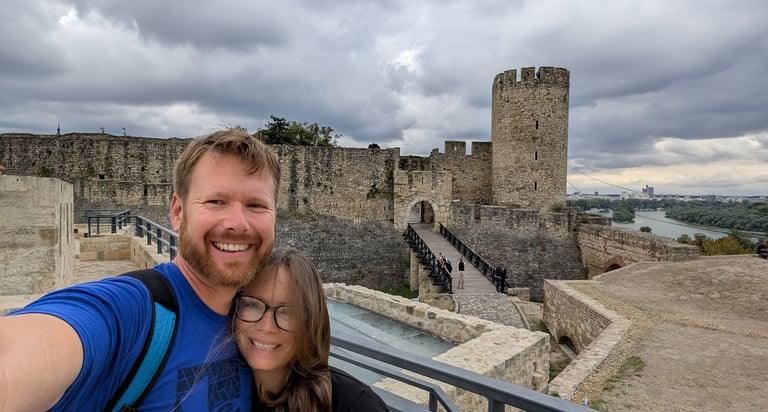
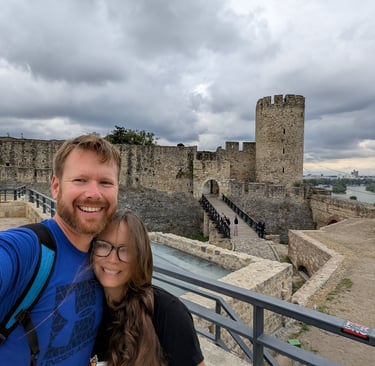
Belgrade Fortress
Serbia Travel Tips & Practical Information
🛂 Visa Requirements as a U.S. Citizen
U.S. citizens do not currently need a visa to visit Serbia for short tourist stays of up to 90 days within a 180-day period. Serbia is not part of the European Union or the Schengen Zone, so entry requirements are separate from many nearby European countries. Always double-check the latest entry requirements before traveling since rules can change.
📱 What SIM Card Works Best in Serbia?
We purchased a tourist SIM card from Yettel after arriving and found the process quick and easy. Coverage throughout the country was excellent, including in smaller towns and along highways. Remember to bring your passport since it is required when purchasing a SIM card.
🗣️ What Language Is Spoken in Serbia?
The official language is Serbian. In larger cities and tourist areas, many people spoke at least some English, especially younger people and hospitality workers. Outside major tourist areas, English was less common, so having Google Translate downloaded was very helpful.
🚰 Is the Water Safe to Drink?
Yes! Tap water in Serbia is generally safe to drink, and I had no issues drinking it throughout my trip.
🚻 Are There Public Toilets?
Most restaurants and cafés have customer bathrooms, but public toilets can sometimes be difficult to find outside larger cities. Some locations charge a small fee, so carrying a bit of cash or coins is helpful.
🚶 Is Serbia Pedestrian Friendly?
In larger cities and town centers, yes. Sidewalks and pedestrian zones are common, though some smaller towns may have uneven sidewalks or less pedestrian-friendly infrastructure. I found walking to be one of the best ways to explore most areas.
📅 Best Time to Visit Serbia
The best time to visit Serbia is during spring (April to June) and fall (September to October) when temperatures are mild and comfortable for sightseeing. Summers can become very hot, especially in the cities, but this is also when festivals, outdoor cafés, and nightlife are at their busiest.
We visited during August, and though it was hot, it wasn’t too bad. We loved spending time outdoors exploring fortresses, riverside promenades, and small towns. Spring and fall are also slightly cheaper and less crowded than peak summer months.
Winter can be cold and snowy depending on the region, though it can be a great time to visit for holiday markets, skiing, and cozy cafés.
🛡️ Is Serbia Safe?
I found Serbia to feel very safe overall and had no major issues during my trip. We walked around during both the day and evening and generally felt comfortable exploring. Like most countries, petty theft and pickpocketing can still happen in crowded tourist areas and on public transportation, so it is important to stay aware of your belongings.
🛒 Best Place to Buy Groceries in Serbia
We mainly shopped at local markets, which offer the best prices, but we also shopped at Idea and Maxi grocery stores. Grocery prices in Serbia were very affordable compared to much of Europe, especially for fresh produce, dairy, bread, and meat products. Bakeries are everywhere and make a great, cheap option for breakfast or snacks.
🚗 Tips on Driving in Serbia
Serbia drives on the right-hand side of the road, just like the USA, so adjusting is fairly easy. U.S. tourists can usually drive with a valid U.S. license, though an International Driving Permit (IDP) is required.
One thing to know is that Serbia uses toll roads on major highways, with payment usually made at toll booths. Roads in rural areas can sometimes be rougher than in Western Europe, and drivers in larger cities may seem more aggressive than what many Americans are used to.
💵 Currency in Serbia
Serbia uses the Serbian Dinar (RSD), not the Euro. Credit cards were accepted in many places, especially in cities, but cash was essential for smaller shops, bakeries, markets, and rural areas. During my trip, I used the online Google currency converter quite a bit because prices in Dinars can look confusing at first. If you want a deeper dive into understanding these Serbian currency quirks, our friends over at Serbia Guidebook have a great breakdown.
🤝 Local Customs in Serbia
Serbians were incredibly friendly and welcoming during my visit. People often seemed more direct and expressive, but they also smiled a lot like people do in the US! I found locals very helpful and hospitable. Greeting people when entering shops or cafés is polite, and tipping around 10% in restaurants is appreciated though not required.
💰 Additional Budget Tip
Serbia is one of the more affordable countries I have visited in Europe, especially when it comes to food, accommodations, and transportation. Long-distance buses between cities are inexpensive, and local bakeries were one of my favorite ways to save money while still eating really well.
We visited three different cities in Serbia—Novi Sad, Belgrade, and Niš—and each one had its own unique charm and personality. Serbia was never really on my travel radar, and I know it probably isn't for a lot of people, which is such a shame. I quickly fell in love with the culture, the food, the landscapes, and especially the people. Every city I visited offered something completely different, and I truly believe Serbia has something for every type of traveler. Throughout these blogs, I hope you discover why Serbia deserves a spot at the top of your list for your next overseas adventure!
Helpful Serbian Phrases & How to Pronounce Them
Here are some simple Serbian phrases and numbers that helped me a lot while traveling. Serbian uses the Latin alphabet as well as Cyrillic, but you’ll usually see Latin in tourist areas. I’ve included easy pronunciation guides so you can actually use them while you’re there! Even just using a few of these made interactions much warmer, and locals always appreciated the effort, even if my pronunciation wasn’t perfect!
Hello- Zdravo (ZDRAH-voh)
Good day- Dobar dan (DOH-bar dahn)
Goodbye- Doviđenja (doh-vee-JEN-yah)
Please- Molim (MOH-leem)
Thank you- Hvala (HVAH-lah)
Yes- Da (dah)
No- Ne (neh)
Excuse me / Sorry- Izvinite (eez-VEE-nee-teh)
Do you speak English?- Da li govorite engleski? (DAH lee goh-VOH-ree-teh ENG-les-kee)
How much is this?- Koliko košta? (koh-LEE-koh KOSH-tah)
Where is…?- Gde je…? (GD-eh yeh…?)
Numbers 1–10 in Serbian (with pronunciation)
One- Jedan (YEH-dahn)
Two- Dva (dvah)
Three- Tri (tree)
Four- četiri (CHEH-tee-ree)
Five- Pet (peht)
Six- šest (shtest)
Seven- Sedam (SEH-dahm)
Eight- Osam (OH-sahm)
Nine- Devet (DEH-veht)
Ten- Deset (DEH-seht)
Must Try National Dishes in Serbia
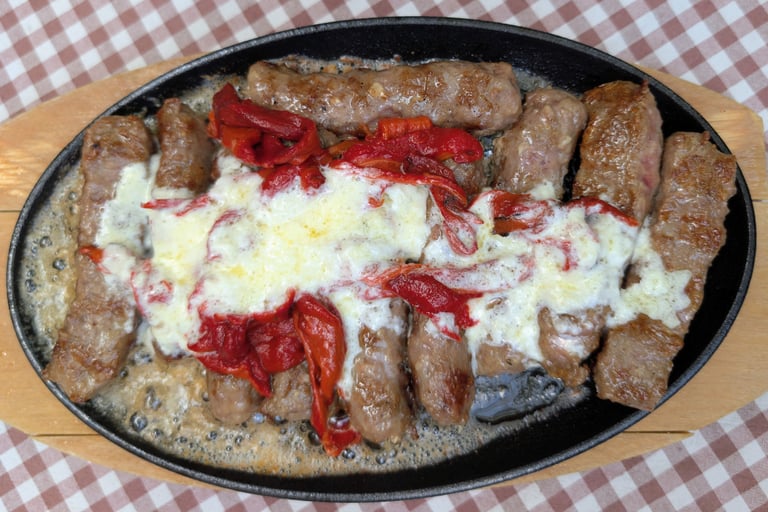
Ćevapi-
Grilled minced meat sausages, usually served with flatbread, onions, and sometimes kajmak.
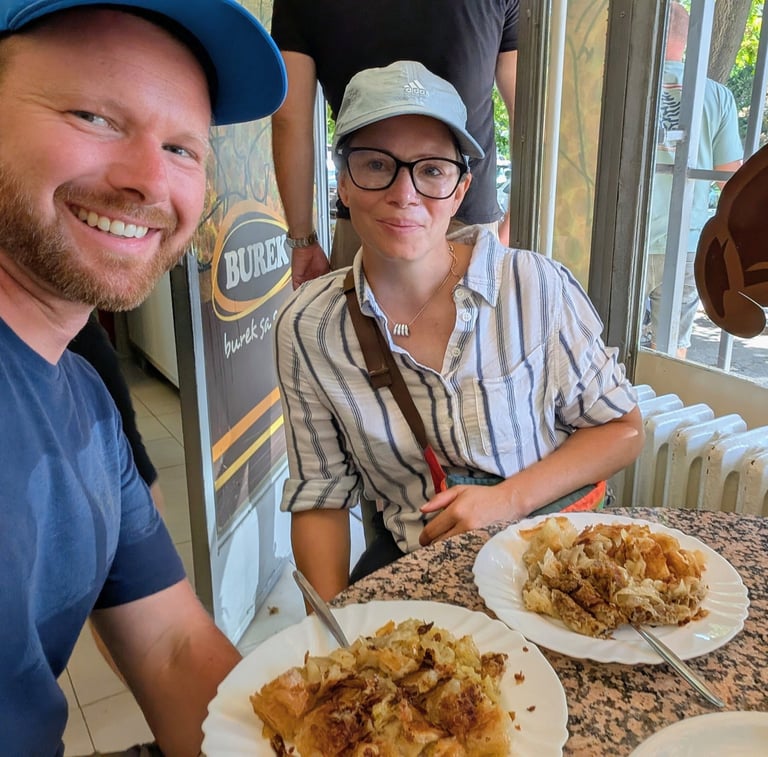
Burek-
A flaky phyllo pastry filled with meat, cheese, vegetables, or even fruit. It’s incredibly popular as a quick breakfast or lunch on the go.
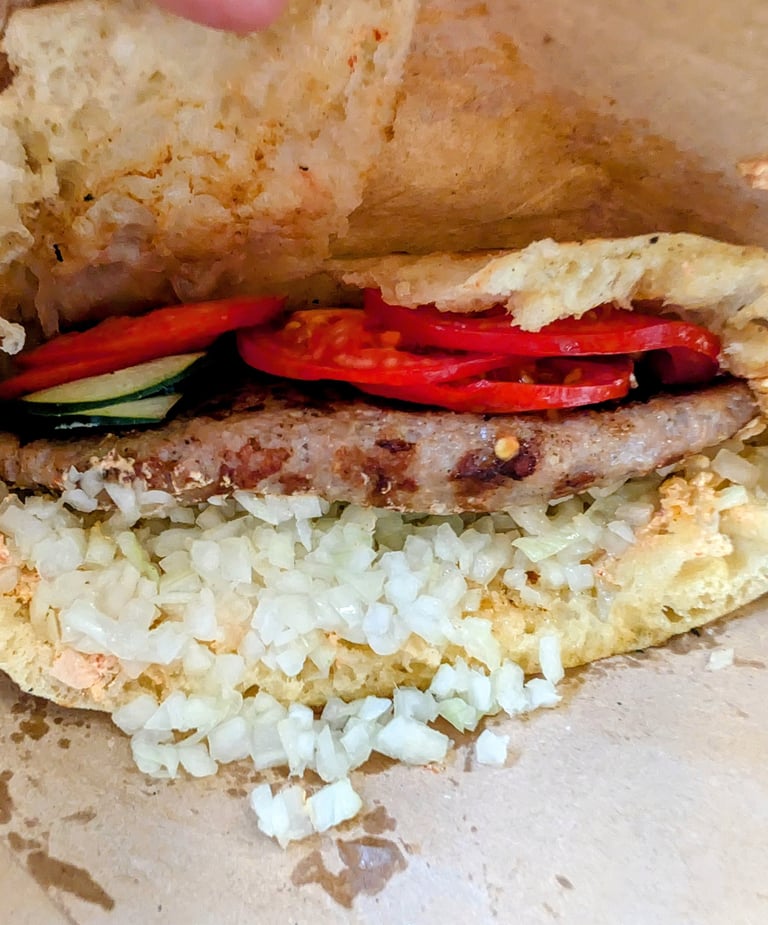
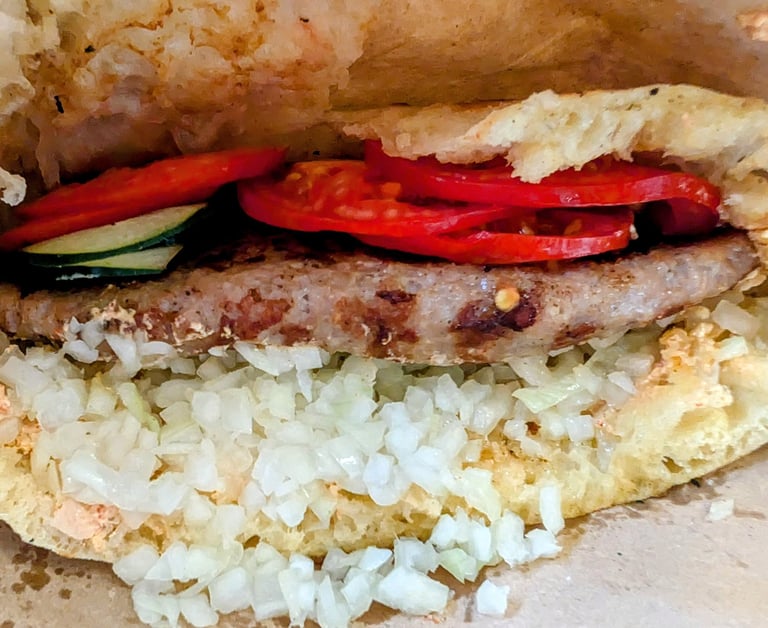
Pljeskavica-
A seasoned ground meat patty (similar to a burger but richer in flavour), typically served in a flatbread “bun” with onions, sauces, and vegetables of your choice.
Sarma-
Pickled cabbage leaves stuffed with a mix of rice, minced meat, and spices, then slowly cooked until tender and full of flavour.
Must Try National Dishes in Serbia
Ćevapi-
Grilled minced meat sausages, usually served with flatbread, onions, and sometimes kajmak.
Burek-
A flaky phyllo pastry filled with meat, cheese, vegetables, or even fruit. It’s incredibly popular as a quick breakfast or lunch on the go.
Pljeskavica-
A seasoned ground meat patty (similar to a burger but richer in flavour), typically served in a flatbread “bun” with onions, sauces, and vegetables of your choice.
Sarma-
Pickled cabbage leaves stuffed with a mix of rice, minced meat, and spices, then slowly cooked until tender and full of flavour.
Need help finding a Hotel?
Check out our recommendations in our Serbia City Guides, OR use Trivago's easy search engine to check all the major booking sites at once, no strings attached.
Five Fun facts about Serbia!
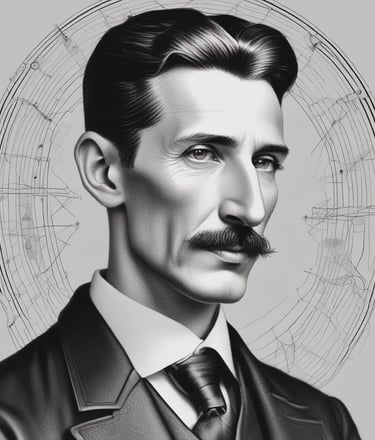
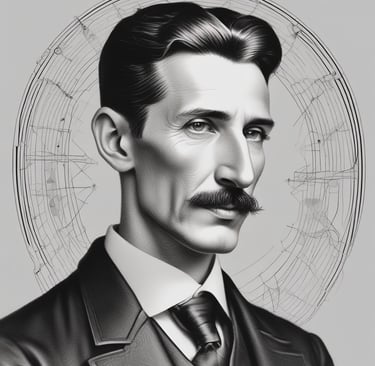
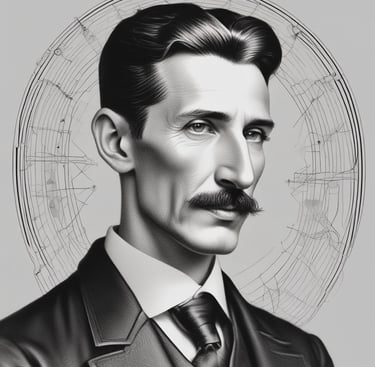
Nikola Tesla is Serbian
Nikola Tesla was born in the Austrian Empire (modern-day Croatia), but he is widely celebrated in Serbia as part of his Serbian heritage and is considered a national hero.
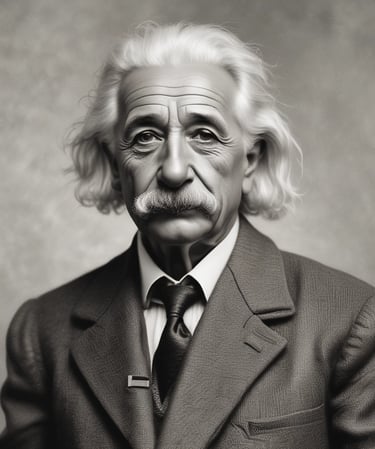
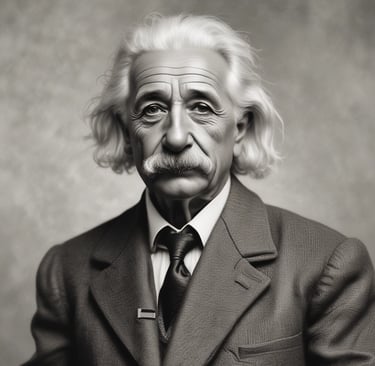
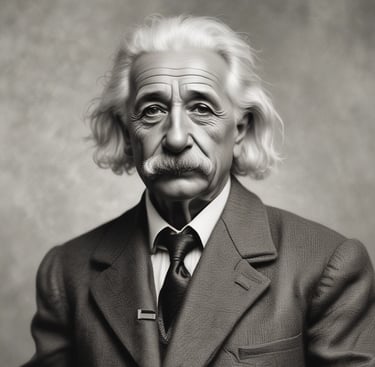
Albert Einstein lived in Novi Sad
Albert Einstein’s wife, Mileva Marić, was from Novi Sad. The couple spent time living there during their early relationship before later separating.
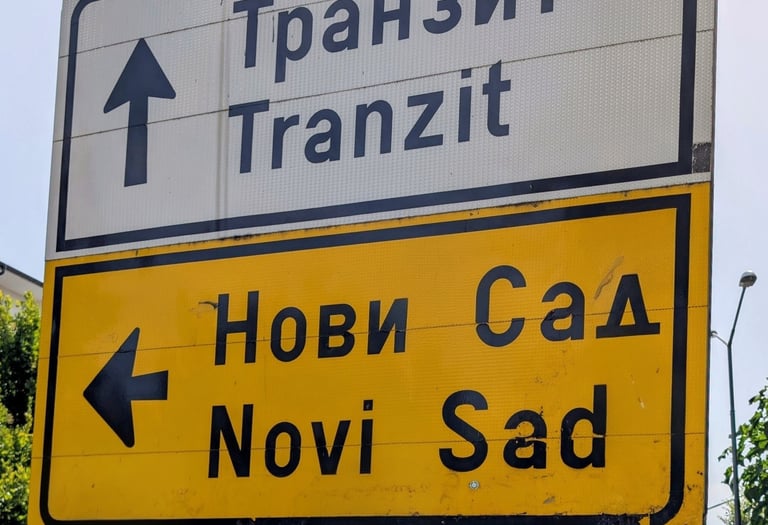
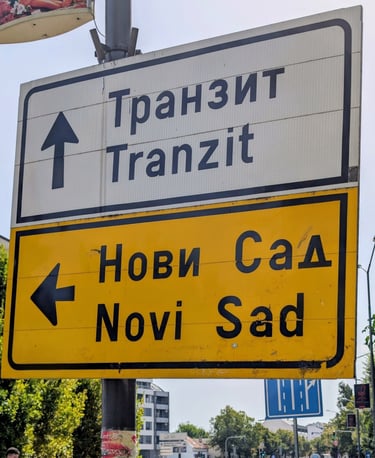
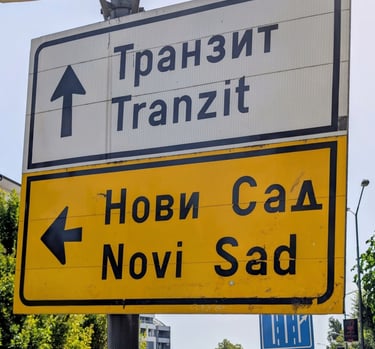
Serbia uses two alphabets!
Serbian is a synchronic digraphic language, that means that Serbian simultaneously uses both the Cyrillic and Latin alphabets! While Cyrillic is the official script used in government, Latin is commonly used in everyday life and online.
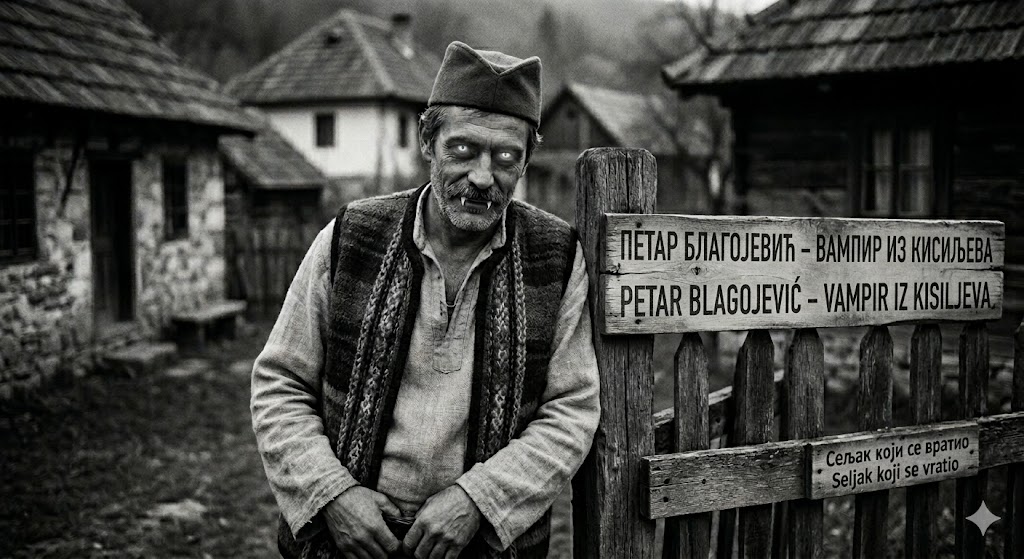
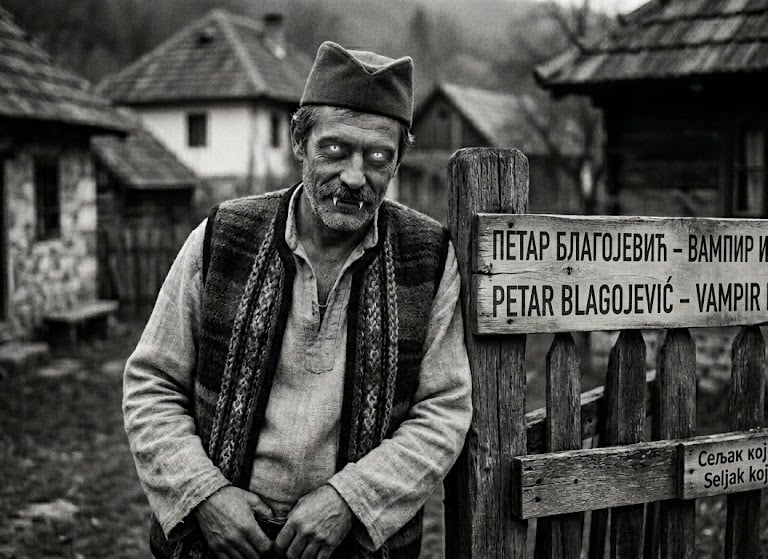
Vampires originated in Serbia!
The modern concept of vampires is often linked to Balkan folklore, including this horrific story about Petar from the 18th century -- Petar Blagojević was a peasant from the village of Kisiljevo who died in 1725. Within eight days of his death, nine other villagers suddenly fell ill and died after mysterious 24-hour illnesses. On their deathbeds, the victims claimed Blagojević had come to them in the night and throttled them. Panic set in, and the villagers demanded his body be exhumed.
An Austrian imperial official happened to be in the area and witnessed the exhumation. He was astonished to report that Blagojević’s body was perfectly preserved, with "new skin and nails" and fresh blood in his mouth. The terrified villagers drove a stake through his heart and burned the body. The official's detailed report was published in a Viennese newspaper, making it one of the very first documented testimonies of vampire hysteria in Eastern Europe. Today, you can still visit the Kisiljevo Cemetery where he was supposedly laid to rest.
The world’s largest sausage coil
In 2013, a record-breaking sausage coil was made in Turija, Serbia, weighing around 340 kg (750 lbs) and measuring nearly 4 meters in diameter!
Albert Einstein
Nikola Tesla
Street sign in both the Cyrillic and Latin alphabet
Five Fun facts about Serbia!
Nikola Tesla is Serbian
Nikola Tesla was born in the Austrian Empire (modern-day Croatia), but he is widely celebrated in Serbia as part of his Serbian heritage and is considered a national hero.
Albert Einstein lived in Novi Sad
Albert Einstein’s wife, Mileva Marić, was from Novi Sad. The couple spent time living there during their early relationship before later separating.
Serbia uses two alphabets!
Serbian is a synchronic digraphic language, that means that Serbian simultaneously uses both the Cyrillic and Latin alphabets! While Cyrillic is the official script used in government, Latin is commonly used in everyday life and online.
Vampires originated in Serbia!
The modern concept of vampires is often linked to Balkan folklore, including this horrific story about Petar from the 18th century -- Petar Blagojević was a peasant from the village of Kisiljevo who died in 1725. Within eight days of his death, nine other villagers suddenly fell ill and died after mysterious 24-hour illnesses. On their deathbeds, the victims claimed Blagojević had come to them in the night and throttled them. Panic set in, and the villagers demanded his body be exhumed.
An Austrian imperial official happened to be in the area and witnessed the exhumation. He was astonished to report that Blagojević’s body was perfectly preserved, with "new skin and nails" and fresh blood in his mouth. The terrified villagers drove a stake through his heart and burned the body. The official's detailed report was published in a Viennese newspaper, making it one of the very first documented testimonies of vampire hysteria in Eastern Europe. Today, you can still visit the Kisiljevo Cemetery where he was supposedly laid to rest.
The world’s largest sausage coil
In 2013, a record-breaking sausage coil was made in Turija, Serbia, weighing around 340 kg (750 lbs) and measuring nearly 4 meters in diameter!
Inspirational Tours
Looking for some travel inspo? Go no further than these curated tours offered through Viator and led by real, local guides. See another side of Serbia.
Conclusion
Overall, our time in Serbia completely exceeded expectations. We honestly didn’t know what to expect before arriving, but we left feeling like we had only scratched the surface of what this country has to offer. From the lively energy of Belgrade, to the relaxed charm of Novi Sad, and the rich history of Niš, every stop brought something different and memorable.
What stood out the most for us was how underrated Serbia feels as a travel destination. The food, the affordability, the landscapes, and especially the warmth of the people made it one of those places that stays with you long after you leave. It’s the kind of country that quietly surprises you in the best way, and we already know we want to come back one day to explore even more.
If you’re planning your own trip, I also recommend checking out Don’s YouTube video on Serbia for a great visual guide, along with my other Serbian City Travel Guides below. Hopefully, this helps you feel a little more prepared and maybe even as excited about Serbia as we were when we left.
Serbia City Guides
Thank you for taking the time to read our blog, your continued support means the world to us! If you haven't already, please sign up for emails so you can stay up to date. And remember, step out of your comfort zone when you travel; try new foods, stay in traditional accommodations, try and speak the native language, even a few phrases is appreciated, talk with strangers, accept invites into their homes, and leave the tourist districts whenever possible. If you're not embracing their culture and their way of life you're missing the most rewarding experiences traveling has to offer!

Meet the Author
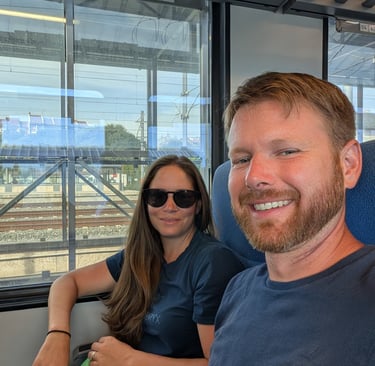
Hi! I’m Samantha Matthews-McCarty, and at 39 I changed careers, leaving construction behind to follow my passion for exploring the world and becoming a travel blogger.
Ironically, writing was probably the last thing I ever imagined myself doing. As a kid, I struggled with undiagnosed dyslexia, which meant reading and writing were frustrating enough that I wanted absolutely nothing to do with either. It wasn’t until my late teens that I discovered I actually loved reading. And somehow, all these years later, I’ve gone from avoiding writing to finding a passion for sharing our adventures through it.
Now, I document our travels through history, culture, food, hiking, and plenty of outdoor adventures, sharing the good, the bad, and occasionally the ridiculous along the way. If I can inspire someone else to step outside their comfort zone and explore a little more of the world, even better!
Thanks to All our Supporters!
Brandon (Exxon)
Ann M.
Jennifer McDonald
Jonel Wachtman
Akash Mondal
Damien Rounds
Robin & Kevin Tice
Gail & Greg McCarty
Erin Bergen
Clair Blume
Kent Rewis
Kris & REW Palmer
Andrew & Justine Knox
Seth Yoder
Cheryl & Hap Reeves
Robert Kooken
Linda Koening-Warren
Kathleen Thompson
Janet McCarty
Diane & Lowell Richardson
Ann Slagle
Stephanie Bender
Kay & Bill Massong
Danielle & Michael Robinson
Enjoy our content?
Show your support and donate here. Unfortunately life isn't free, content creation takes time, and we need to be fed frequently.
Thanks! Moose and Bugs